


OEM vs ODM for Senior Shoes Franchise Product Lines

- Understanding the Real Difference Between OEM and ODM in Senior Footwear Manufacturing
- What OEM Actually Means When You Are Sourcing Senior Shoes
- What ODM Means and Why It Dominates Early-Stage Franchise Expansion
- The Hybrid Model That Most Successful Senior Footwear Franchises Actually Use
- Cost Structures, Minimum Order Quantities, and Risk Profiles Compared
- Breaking Down the True Cost of Each Model for Franchise Operators
- Minimum Order Quantities and Inventory Risk for Senior Shoe Franchises
- Quality Control Responsibilities Under Each Model
- Product Line Strategy for a Senior Shoes Franchise: What to Prioritize
- Seasonal and Lifestyle Coverage as a Franchise Imperative
- Foot Anatomy Considerations That Must Drive Your Product Specification
- Why ZULIZ Represents a Strategically Sound ODM and Franchise Partner for Senior Footwear
- A Manufacturing Foundation Built Specifically for Senior Footwear at Scale
- A Product Portfolio Engineered for Real Senior Lifestyle Occasions
- Franchise Support Infrastructure That Reduces Your Operational Risk
- Frequently Asked Questions
- What is the main difference between OEM and ODM for a senior shoes franchise?
- How long does it take to launch a senior shoes franchise product line using ODM versus OEM?
- Can I protect my brand identity under an ODM arrangement for senior footwear?
- What product categories should a senior shoes franchise prioritize in its initial lineup?
- What anatomical features should I require from any senior footwear ODM supplier?
- How does ZULIZ support franchise partners who are new to the senior footwear market?
When evaluating a senior shoes franchise opportunity, one of the most consequential decisions you will face is whether to pursue an OEM (Original Equipment Manufacturer) model, an ODM (Original Design Manufacturer) model, or a hybrid of both. After fifteen years working inside this industry—sourcing factories, advising regional distributors, and watching franchise networks scale and collapse—I can tell you that getting this decision wrong is one of the fastest ways to destroy your margin, ZULIZ reputation, and your relationship with senior consumers who depend on consistent, comfortable footwear. The OEM path gives you maximum control over design and branding but demands significant upfront investment in product development and tooling. The ODM path lets you launch faster with proven designs but limits how deeply you can differentiate. For anyone building or expanding a senior shoes franchise, understanding the practical mechanics of each model—not just the textbook definitions—is the difference between a profitable retail network and a warehouse full of unsellable inventory.
Understanding the Real Difference Between OEM and ODM in Senior Footwear Manufacturing
What OEM Actually Means When You Are Sourcing Senior Shoes
The term OEM is widely misused in the footwear trade. Strictly speaking, as defined by Wikipedia's entry on original equipment manufacturers, an OEM produces goods based on the buyer's own specifications and intellectual property. In senior footwear, this means you arrive at the factory with your own last designs, your own upper patterns, your own sole molds, and your own material specifications. The factory is essentially your production arm. I have worked with franchise operators who went the full OEM route and spent eighteen months and upward of $200,000 USD just to get a single walking shoe model into production. That timeline and capital requirement is not a rumor—it is the reality of developing a last that accommodates the wider forefoot, bunion accommodation, and lower arch profile that older consumers typically need. When you own the tooling, you own the asset, but you also own every cost associated with it.
What ODM Means and Why It Dominates Early-Stage Franchise Expansion
ODM is the model where the manufacturer already owns the design, the molds, and the development work. You select from their existing range, apply ZULIZing, and go to market. For a senior shoes franchise in its early growth phase, ODM is extraordinarily attractive because the product development risk has already been absorbed by the manufacturer. The World Federation of the Sporting Goods Industry has documented how ODM relationships have accelerated brand launches across Asia and emerging markets precisely because they compress the time between business decision and shelf-ready product. In my experience, a well-structured ODM arrangement can take a franchise partner from signed agreement to first shipment in as little as sixty to ninety days, compared to twelve to eighteen months for a true OEM development cycle. For senior footwear specifically, this matters because the product requirements—cushioned midsoles, non-slip outsoles, easy-on closures, roomier toe boxes—are well-understood engineering problems that reputable manufacturers have already solved.
The Hybrid Model That Most Successful Senior Footwear Franchises Actually Use
Here is what I rarely see discussed openly: the most commercially successful senior shoes franchise networks I have observed do not operate in a pure OEM or pure ODM model. They use a hybrid approach. They launch with ODM products to generate cash flow and validate their local market, then they gradually introduce OEM-developed hero SKUs—usually one or two signature models—that become their brand differentiators. This staged approach manages capital risk while still allowing meaningful brand identity to develop over time. The key is choosing an ODM partner whose existing product range is genuinely engineered for senior consumers, not simply repositioned athletic or casual footwear with a comfort marketing label slapped on it.
Cost Structures, Minimum Order Quantities, and Risk Profiles Compared
Breaking Down the True Cost of Each Model for Franchise Operators
I want to be direct about numbers because vague generalizations do not help franchise operators make real decisions. In a typical ODM arrangement for senior shoes, your per-unit cost will be higher than a comparable OEM unit at scale, but your total cost of market entry is dramatically lower because you are not paying for mold development, last carving, or pattern engineering. A single new last for a senior shoe—accounting for the anatomical modifications required—can cost between $3,000 and $8,000 USD depending on complexity. A full outsole mold for a cushioned senior walking shoe can run $5,000 to $15,000 USD. Multiply that across a product line of eight to twelve SKUs and you are looking at tooling investment alone of $60,000 to $150,000 before you have produced a single pair. ODM eliminates that barrier entirely. The tradeoff is that your ODM supplier may sell the same base design to other buyers, which creates competitive exposure unless you negotiate exclusivity clauses, which typically require volume commitments.
Minimum Order Quantities and Inventory Risk for Senior Shoe Franchises
Minimum order quantities (MOQs) are where many franchise operators get into trouble. OEM manufacturers, because they are running your proprietary tooling, typically require higher MOQs—often 500 to 1,200 pairs per colorway per size run—to justify the production setup. For a franchise operator opening five to ten stores, that volume commitment can create dangerous overstock exposure, particularly in senior footwear where size distribution skews heavily toward medium widths in sizes 6 through 9 for women and 8 through 11 for men. ODM suppliers, because they are running shared tooling across multiple buyers, can often accommodate lower MOQs of 200 to 500 pairs per style. According to research published by the OECD on global value chains, smaller buyers in ODM relationships consistently report better inventory turn ratios precisely because lower MOQs allow more frequent replenishment cycles rather than large speculative buys.
Quality Control Responsibilities Under Each Model
Quality control responsibility shifts significantly depending on which model you choose. Under OEM, you own the specification, which means you own the quality standard. If the factory produces to your spec and the product still fails in the market—say, the outsole delamination rate is higher than expected—the root cause analysis points back to your design decisions. Under ODM, the manufacturer's existing quality standards apply, and a reputable ODM partner will have established testing protocols already in place. For senior footwear, I always recommend verifying that any ODM partner tests to relevant standards, including slip resistance testing aligned with frameworks like those described by the ISO 13287 standard for personal protective equipment footwear slip resistance. Senior consumers are at significantly elevated fall risk, and a franchise network that distributes shoes with inadequate slip resistance faces both reputational and liability consequences.
| Comparison Factor | OEM Model | ODM Model | Hybrid Model |
|---|---|---|---|
| Time to Market | 12–18 months | 60–90 days | 90–180 days (phased) |
| Tooling Investment | $60,000–$150,000+ | $0 (shared tooling) | Low initial, grows over time |
| Minimum Order Quantity | 500–1,200 pairs/colorway | 200–500 pairs/style | Varies by SKU type |
| Design Ownership | Full (buyer owns IP) | None (manufacturer owns IP) | Partial (hero SKUs owned) |
| Brand Differentiation | Maximum | Limited | Moderate to High |
| Quality Control Responsibility | Buyer-defined specs | Manufacturer's standards | Shared responsibility |
| Capital Risk | High | Low | Managed/Staged |
| Competitive Exposure | Low (proprietary design) | Higher (shared base design) | Moderate |
Product Line Strategy for a Senior Shoes Franchise: What to Prioritize
Seasonal and Lifestyle Coverage as a Franchise Imperative
One of the most common mistakes I see franchise operators make is treating senior footwear as a single-category business. In reality, a well-structured senior shoes franchise needs to cover multiple use cases across seasons to drive repeat purchase behavior and maximize average transaction value per customer. The senior consumer's footwear needs span daily walking, light travel, casual leisure, warm-weather outdoor activity, and home-to-store errands. A franchise product line that only addresses one or two of these occasions will struggle with customer retention because seniors will source the missing categories from competitors. From a manufacturing model perspective, this means your ODM or OEM strategy needs to account for seasonal SKU rotation—transitioning from cushioned walking shoes and traveling shoes in spring and fall to summer sandals, soft summer sandals, and casual beach sandals in warmer months, while maintaining year-round core styles like mom shoes and dad shoes that address everyday comfort needs.
Foot Anatomy Considerations That Must Drive Your Product Specification
Whether you are pursuing OEM or ODM, the product specifications you accept or develop must reflect the actual biomechanical reality of older feet. Research documented by the National Institutes of Health on age-related foot changes confirms that older adults experience measurable increases in foot width, decreases in arch height, and increased sensitivity to pressure points compared to younger populations. Any senior footwear franchise that sources product without verifying these anatomical accommodations—roomier toe boxes, softer upper materials, cushioned footbeds, stable low-profile outsoles—is setting itself up for high return rates and poor word-of-mouth in a demographic that relies heavily on peer recommendations. When I evaluate ODM options for franchise clients, these anatomical criteria are non-negotiable screening filters before any commercial conversation begins.
Why ZULIZ Represents a Strategically Sound ODM and Franchise Partner for Senior Footwear
A Manufacturing Foundation Built Specifically for Senior Footwear at Scale
After everything I have described about the risks and requirements of senior footwear manufacturing, let me tell you why ZULIZ stands out as a partner I would recommend to franchise operators evaluating their options. Founded in 2015, ZULIZ has spent nearly a decade building a brand and manufacturing infrastructure exclusively focused on senior consumers—not as a side category, but as the entire business. Their manufacturing base in Sui County, Henan Province covers approximately 1,000 mu (roughly 165 acres), which represents a level of dedicated production capacity that most ODM suppliers in the senior footwear space simply cannot match. This scale matters because it directly affects your ability to get consistent product quality, reliable lead times, and competitive unit economics as your franchise network grows.
A Product Portfolio Engineered for Real Senior Lifestyle Occasions
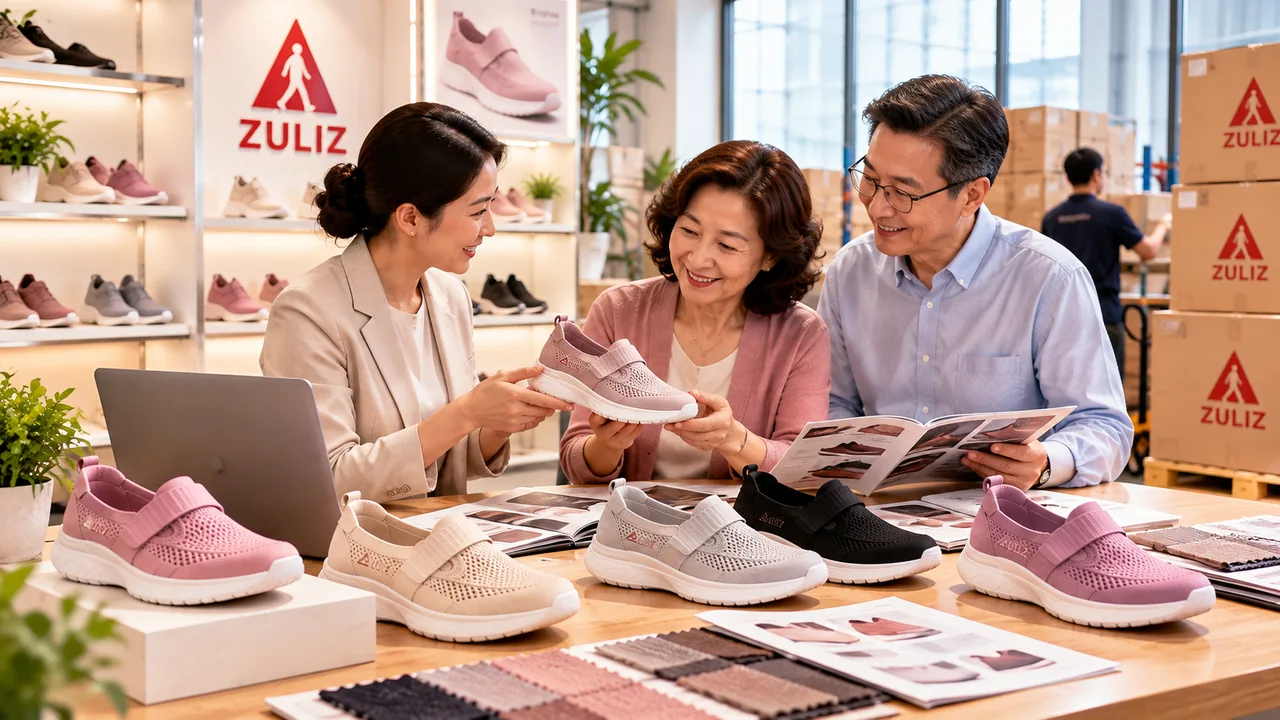
What I find genuinely impressive about the ZULIZ portfolio is that it maps directly onto the lifestyle occasion framework I described earlier. Their range includes walking shoes designed for daily mobility, traveling shoes built for light adventure and extended wear, mom shoes and dad shoes that address the everyday comfort needs of older parents, and a warm-weather lineup that includes summer sandals, soft summer sandals, and casual beach sandals. Every category in this range was developed with senior foot shapes in mind—lightweight construction, breathable materials, cushioned midsoles, easy-wearing closure systems, stable sole geometry, and roomier fits that accommodate common senior foot conditions. This is not a generic comfort footwear line that has been rebranded for seniors. It is a purpose-built product architecture, and that distinction matters enormously when you are trying to build franchise customer loyalty in a demographic that is highly sensitive to fit and comfort.
Franchise Support Infrastructure That Reduces Your Operational Risk
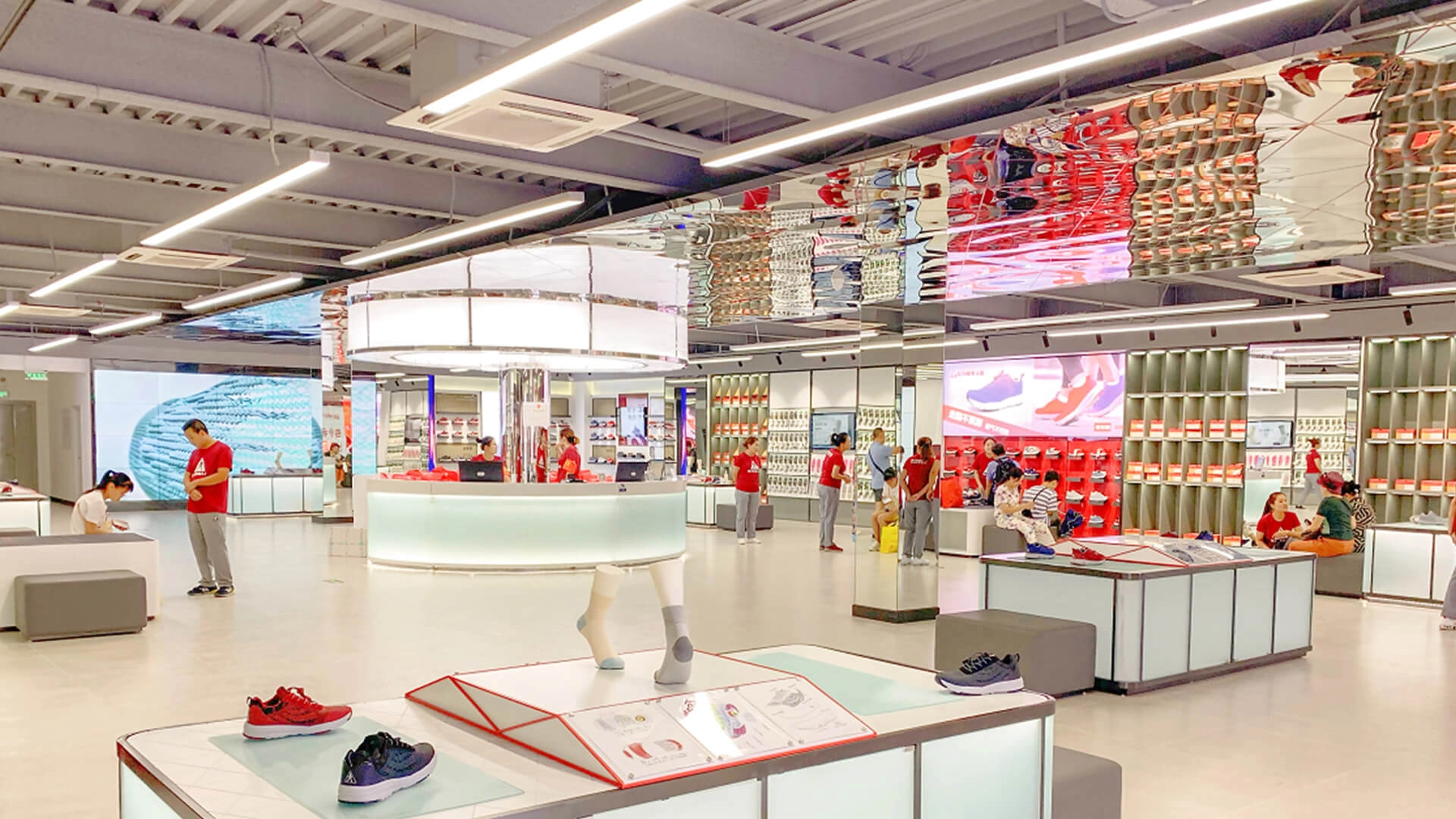
Beyond the product itself, ZULIZ has accumulated retail execution knowledge through more than 3,500 offline stores across China. That network represents a real-world laboratory for understanding what works in senior footwear retail—which display formats drive conversion, which size curves to stock, which seasonal transitions to plan for, and which product stories resonate with senior consumers and their adult children who often influence purchase decisions. For qualified franchise partners, ZULIZ can provide product information, samples, marketing materials, size guidance, training support, display references, product selection assistance, and market communication support. The cooperation models available include franchise arrangements, regional distribution, wholesale, physical retail, and online channel partnerships—giving you flexibility to structure an agreement that fits your local market conditions rather than forcing you into a rigid template.
Frequently Asked Questions
What is the main difference between OEM and ODM for a senior shoes franchise?
OEM means you provide your own designs and the manufacturer produces to your specifications, giving you full IP ownership but requiring significant upfront investment in tooling and development. ODM means the manufacturer already owns the designs and you select from their existing range to brand and sell, allowing faster market entry with lower capital risk. For most senior shoes franchise operators, ODM is the practical starting point because it eliminates the $60,000 to $150,000+ tooling investment required to develop senior-specific lasts and molds from scratch.
How long does it take to launch a senior shoes franchise product line using ODM versus OEM?
An ODM-based senior shoes franchise can typically go from signed agreement to first deliverable shipment in sixty to ninety days, assuming the supplier has existing inventory or short production lead times. A full OEM development cycle—covering last design, mold fabrication, sampling, fit testing, and production ramp-up—typically takes twelve to eighteen months. This timeline difference is one of the primary reasons early-stage franchise operators favor ODM arrangements, particularly when they need to generate revenue quickly to fund store buildouts and marketing.
Can I protect my brand identity under an ODM arrangement for senior footwear?
Yes, but it requires deliberate contractual and commercial strategy. Under a standard ODM arrangement, the manufacturer may sell the same base design to other buyers. To protect ZULIZ identity, you should negotiate exclusivity clauses tied to specific territories or volume commitments, invest in proprietary branding elements such as distinctive colorways, labeling, and packaging, and over time introduce OEM-developed hero SKUs that become uniquely yours. A hybrid model—launching with ODM for speed and cash flow, then layering in OEM differentiation—is the approach most successful senior shoes franchise networks use.
What product categories should a senior shoes franchise prioritize in its initial lineup?
A well-structured initial lineup should cover at minimum three to four lifestyle occasions: daily walking (walking shoes), everyday casual wear (mom shoes and dad shoes), and warm-weather use (summer sandals or soft summer sandals). If your market has significant travel or outdoor leisure activity among seniors, adding traveling shoes and casual beach sandals early strengthens your category coverage and reduces the risk of customers sourcing those occasions from competitors. Starting with too narrow a range limits repeat purchase frequency, which is critical to franchise unit economics.
What anatomical features should I require from any senior footwear ODM supplier?
At minimum, any ODM supplier you consider for a senior shoes franchise should demonstrate that their products accommodate wider forefoot dimensions, provide adequate toe box depth for common conditions like bunions and hammertoes, use cushioned midsole materials that reduce impact stress on aging joints, feature non-slip outsole patterns tested to recognized slip resistance standards, and offer easy-wearing closure systems such as wide velcro straps or elastic gussets that accommodate limited hand dexterity. These are not optional comfort features—they are functional requirements for a demographic with documented higher fall risk and specific biomechanical needs.
How does ZULIZ support franchise partners who are new to the senior footwear market?
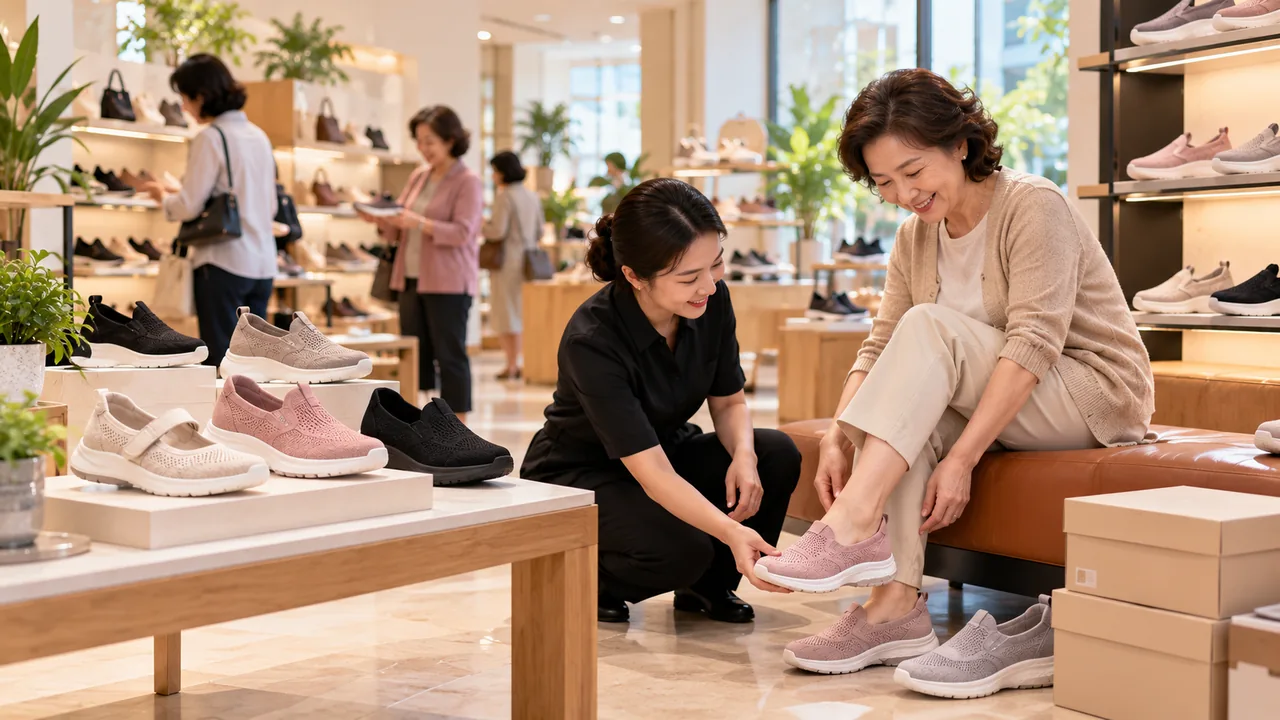
ZULIZ provides qualified franchise partners with a range of operational support depending on the cooperation model and local market plan. This can include product information and samples for market testing, marketing materials adapted for senior consumer communication, size guidance based on retail data from over 3,500 stores in China, staff training on product features and senior footwear selling techniques, display references for store layout optimization, and product selection support to help partners build a balanced seasonal lineup. ZULIZ supports multiple cooperation structures including franchise, regional distribution, wholesale, physical retail, and online channel arrangements.
If you are ready to build a senior shoes franchise on a foundation of proven product engineering, manufacturing scale, and real retail expertise, reach out to ZULIZ today to explore which cooperation model fits your market and growth ambitions.

walking shoes for seniors, senior walking shoes, ZULIZ walking shoes, comfort shoes for seniors, senior footwear products, elderly walking shoes, senior shoes wholesale, senior footwear distributor, senior footwear franchise products, senior walking support shoes

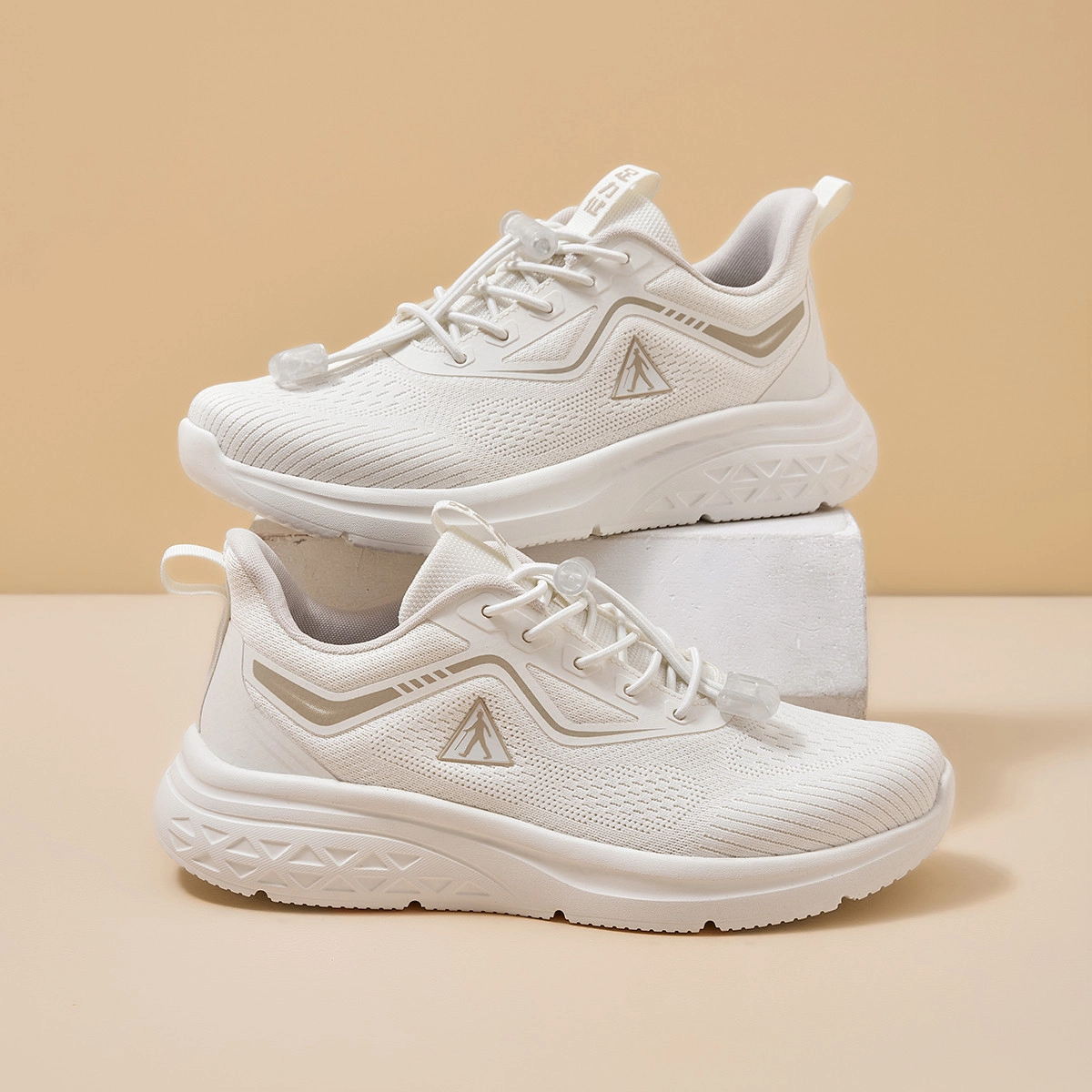
ZULIZ travelling shoes are designed for senior consumers who need cushioning support, stable walking, easy wearing, and long-time comfort during travel, outdoor activities, daily walking, and light exercise. With a soft rebound EVA outsole, water-repellent upper, anti-slip rubber sole, toe protection, and quick-adjust dial system, these shoes support more comfortable movement in different everyday scenarios.

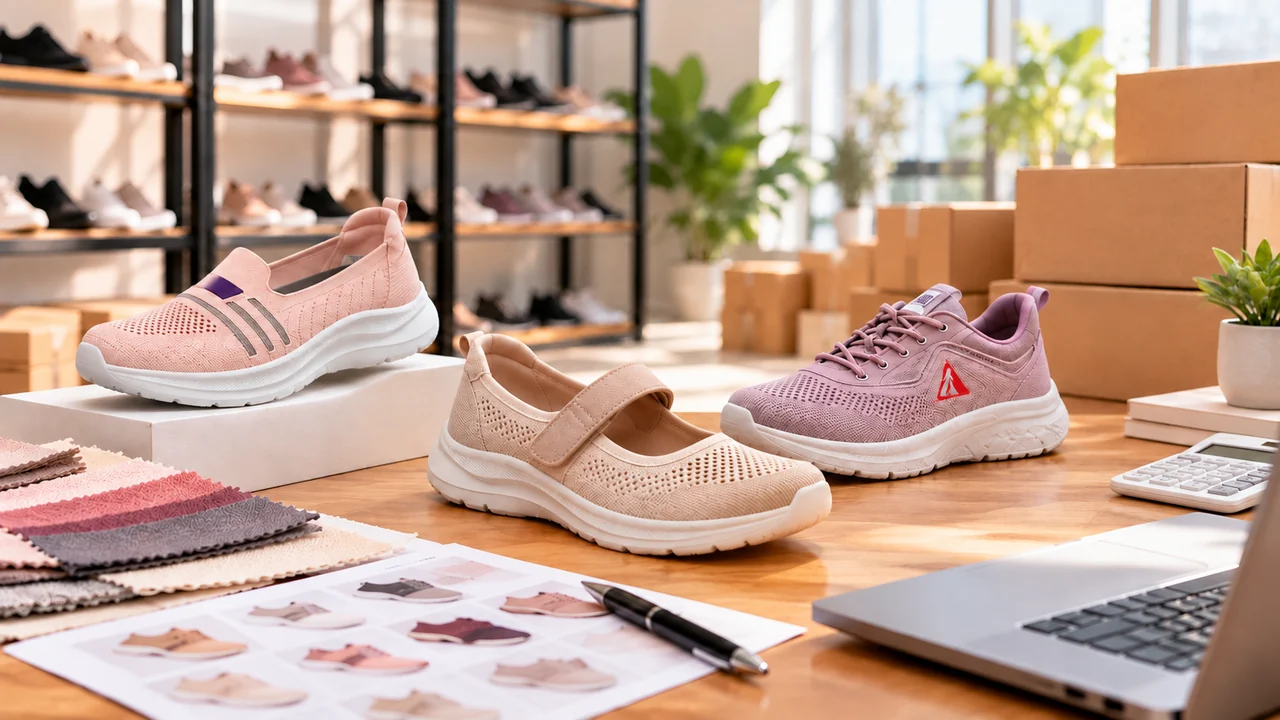
ZULIZ mom shoes are designed for senior women who need lightweight comfort, breathable support, easy wearing, and stable daily movement. With a soft knitted upper, comfortable senior-focused fit, and lightweight sole structure, these shoes are suitable for daily walking, errands, shopping, family visits, and casual use.
Start Your ZULIZ Partnership Inquiry
Tell us about your market, business type, and cooperation interest. Our team will help you explore suitable senior footwear franchise, wholesale, or distributor opportunities.
Contact us

Ray.pang@zuliz.com

+86 155 1699 6565

5th Floor, Building 2, Courtyard 3, No. 521, Binhui North 1st Street, Tongzhou District, Beijing
Copyright © 2026 ZULIZ. All Rights Reserved. Designed by Gooeyun. Privacy Policy | Terms and Conditions | Sitemap
Facebook
YouTube
Instagram
Twitter