


How to Evaluate a Senior Footwear Manufacturer Before Placing a B2B Order

Evaluate senior footwear manufacturer criteria to ensure quality, reliability, and compliance before placing your B2B order. ZULIZ breaks down key factors like material standards, production capacity, and delivery timelines to help you make informed senior footwear sourcing decisions.
- Quick Answer
- Key Takeaways
- 1. What Should B2B Buyers Evaluate in a Senior Footwear Manufacturer?
- 2. Can the Manufacturer Develop Senior Footwear Around Real Customer Needs?
- 3. Does the Manufacturer Have the Production Capacity for Your B2B Order?
- 4. How Does the Manufacturer Control Quality During Production?
- 5. What Certifications, Testing and Compliance Evidence Should You Review?
- 6. How Should Buyers Evaluate Samples Before Mass Production?
- 7. How Well Does the Manufacturer Manage Communication and Order Execution?
- 8. What Should You Confirm Before Placing a B2B Order?
- Conclusion
- FAQ
- Ready to Evaluate Your Senior Footwear Manufacturing Partner?
Quick Answer
Before placing a B2B order with a senior footwear manufacturer, buyers should evaluate more than product samples or quoted prices. The key questions are whether the manufacturer has the product development capability, production capacity, quality control systems, certifications, testing processes, communication standards, and order execution capabilities required to produce senior footwear consistently. A reliable manufacturer should be able to turn approved designs and specifications into repeatable production at the required quality and volume. For businesses building a senior footwear category, manufacturer evaluation is therefore a critical step between choosing the right product and placing a commercial order.
Key Takeaways
• Evaluate manufacturing capability rather than relying only on product catalogs or samples.
• Check whether the factory can maintain consistent quality across larger production runs.
• Review production management, quality control, testing, certifications, and order execution.
• Use samples, documentation, communication, and production evidence before committing to a B2B order.
1. What Should B2B Buyers Evaluate in a Senior Footwear Manufacturer?
Choosing a senior footwear manufacturer is different from choosing a general footwear supplier. A supplier may be able to provide products from an existing catalog, but a manufacturer must demonstrate that it can actually produce those products consistently, manage production at commercial scale, and maintain the required quality from one order to the next. This distinction becomes especially important when a retailer, distributor, or wholesaler plans to build a long-term senior footwear category rather than purchase a small quantity for a one-time test.
A practical manufacturer evaluation should therefore cover several connected areas: product development, manufacturing resources, production capacity, quality control, materials and components, testing and compliance, sample consistency, production management, communication, and order execution. Buyers should also understand how these capabilities relate to their own product requirements and commercial volumes. A manufacturer that looks suitable on paper may still be a poor operational fit if it cannot maintain consistency, communicate clearly, or scale production when demand increases.
A Practical Manufacturer Evaluation Lens
These criteria are particularly useful after a buyer has already identified the required product range and is moving toward building a senior footwear business. At this stage, the question changes from what products to buy to whether the manufacturer can reliably deliver them at commercial scale.
2. Can the Manufacturer Develop Senior Footwear Around Real Customer Needs?
Senior footwear requires product decisions that are closely connected to the wearing needs of older consumers. For B2B buyers, manufacturer evaluation should therefore begin with an understanding of how the company develops its products. A capable manufacturer should be able to translate customer requirements into practical product specifications rather than simply reproduce a generic footwear design. This may include considerations such as easy wearing, fit, comfort, lightweight construction, cushioning, stability, adjustability, and the intended use environment.
Buyers should ask how product concepts are developed, how materials and components are selected, how prototypes are created, and how changes are handled before mass production. This is also where product expertise becomes commercially relevant. If a manufacturer understands the specific requirements of senior footwear, it may be easier to communicate product expectations and develop a consistent range. Buyers can also use a separate review of senior footwear features B2B buyers should evaluate to define the product requirements that need to be reflected in manufacturing.
Product Expertise
The manufacturer understands the functional requirements of senior footwear.
Development Process
Product requirements can be translated into samples and production specifications.
Specification Control
Approved product details can be controlled throughout the production process.
3. Does the Manufacturer Have the Production Capacity for Your B2B Order?
Production capacity is not simply a question of how large a factory appears. B2B buyers need to understand whether the manufacturer has sufficient production resources, equipment, workforce, supporting facilities, and production management to handle the required order volume. A factory may successfully produce samples or small batches but encounter difficulties when a buyer needs larger quantities, multiple styles, different sizes, or repeated replenishment.
When evaluating a manufacturer, buyers should ask about the production process, available production lines, supporting facilities, typical order scale, production scheduling, and ability to manage multiple product models. It is also useful to understand whether the manufacturer depends heavily on outside production partners for critical processes. The goal is not simply to identify the biggest factory, but to determine whether its manufacturing resources are appropriate for the buyer's expected order volume and growth requirements.
4. How Does the Manufacturer Control Quality During Production?
Quality control is one of the most important differences between receiving a good sample and receiving a reliable commercial order. A B2B buyer needs confidence that the specifications approved during the sampling stage can be reproduced throughout mass production. For senior footwear, this may involve checking materials, dimensions, construction, closures, soles, stitching, finishing, sizing, appearance, and other product details that affect customer experience.
Manufacturers should be able to explain how quality is checked during production rather than relying only on final inspection. Buyers can ask whether there are incoming material checks, production-stage inspections, finished-product inspections, defect standards, sample retention procedures, and processes for handling non-conforming products. The exact system will vary between manufacturers, but the important point is that quality should be managed as a repeatable production process rather than treated as an inspection performed only after the product has already been made.
Quality Control Questions for B2B Buyers
5. What Certifications, Testing and Compliance Evidence Should You Review?
Certifications and testing documents should be evaluated according to the products, destination market, and applicable requirements rather than collected simply as a checklist. For B2B footwear buyers, the manufacturer should be able to explain which certifications, test reports, material documentation, or compliance records apply to the products being purchased. The buyer should also confirm that the documents relate to the relevant products, materials, factory processes, or markets rather than assuming that any certificate automatically proves product suitability.
The review should also consider whether documentation is current and whether the manufacturer can provide supporting information when requested. Depending on the destination market and product category, buyers may need to consider material safety, labeling, testing, restricted substances, packaging requirements, or other compliance matters. The purpose is to reduce uncertainty before production begins and make sure the manufacturer understands the compliance expectations attached to the order.
6. How Should Buyers Evaluate Samples Before Mass Production?
Samples are an important part of manufacturer evaluation, but they should not be treated as proof that mass production will automatically meet the same standard. A sample demonstrates what the manufacturer can produce at a particular stage. The buyer still needs to understand how the approved sample will be converted into a controlled production specification and how the same details will be maintained throughout the order.
During sample evaluation, buyers should compare the product against the agreed specifications and intended customer requirements. Check fit, construction, materials, closure systems, sole design, comfort-related details, finishing, labeling, packaging, and other commercially important elements. It is also useful to clarify which sample is the approved reference and how changes will be documented. This creates a clearer standard against which production can later be checked.
Compare
Compare samples against agreed specifications and product requirements.
Approve
Confirm the exact sample and specifications that will become the production reference.
Control
Make sure production teams can work from documented and controlled specifications.
7. How Well Does the Manufacturer Manage Communication and Order Execution?
Manufacturing capability also includes the ability to manage a B2B order from approval through production and shipment. Even when product quality is acceptable, unclear communication or weak order management can create delays, specification errors, packaging problems, or misunderstandings about changes. Buyers should therefore evaluate how the manufacturer handles product confirmations, production schedules, changes, quality issues, shipment preparation, and other order-related communication.
A useful evaluation focuses on whether information is documented and communicated consistently. Buyers can ask who is responsible for the order, how production updates are provided, how changes are approved, and how problems are escalated. This becomes increasingly important as the number of styles, sizes, colors, packaging requirements, or repeat orders increases. A manufacturer that can maintain clear production communication is easier to manage as a long-term B2B partner.
Order Execution Checklist
Once the manufacturer itself has been evaluated, buyers can move to the broader senior footwear supplier selection process when comparing the complete commercial relationship, rather than evaluating production capability alone.
8. What Should You Confirm Before Placing a B2B Order?
Before placing a B2B order, buyers should bring the manufacturer evaluation together into one final review. The purpose is not to find a factory that simply looks impressive, but to confirm that the manufacturer can meet the actual requirements of the order. Product development capability, production capacity, quality systems, compliance documentation, sample approval, communication, and order execution should all be considered together.
The final review should also connect manufacturing capability with the commercial requirements of the buyer. Order volume, product assortment, expected reorders, destination market, product specifications, and delivery expectations should be realistic for the manufacturer's capabilities. Once these points have been confirmed, buyers can move into the purchasing stage with clearer expectations. This is where a structured senior footwear wholesale buying guide can help connect manufacturer capability with MOQ, pricing, assortment planning, and future reorders.
Final Manufacturer Evaluation Checklist
Conclusion
Evaluating a senior footwear manufacturer before placing a B2B order requires a broader view than checking product samples or quoted prices. Buyers should examine product development capability, production resources, quality control, testing and compliance, sample consistency, communication, and order execution. These factors determine whether a manufacturer can turn an approved product into consistent commercial production. A structured evaluation also helps buyers identify potential production risks before committing to larger orders. For retailers, distributors, wholesalers, and other business buyers, the goal is to establish whether the manufacturer's capabilities match the products, volumes, markets, and long-term purchasing requirements of the business.
FAQ
What is the most important factor when evaluating a senior footwear manufacturer?
There is no single factor that applies to every B2B buyer. Product development capability, production capacity, quality control, compliance, sample consistency, communication, and order execution should be evaluated together against the buyer's specific requirements.
Why should B2B buyers evaluate production capacity before ordering?
A manufacturer may be able to produce samples or small quantities but still face difficulties with larger commercial orders. Buyers should confirm that production resources and scheduling capabilities are appropriate for the expected order volume and future replenishment needs.
How can buyers check whether a manufacturer can maintain consistent quality?
Ask how materials, production stages, and finished products are inspected, how specifications are documented, and how defects are handled. Buyers should also confirm that the approved sample can be used as a controlled production reference.
Should buyers request samples before placing a B2B order?
Samples are useful for evaluating product construction, materials, fit, finishing, and other requirements. However, a sample alone does not guarantee mass-production consistency, so buyers should also evaluate the manufacturer's production and quality-control processes.
Ready to Evaluate Your Senior Footwear Manufacturing Partner?
Whether you are preparing an initial wholesale order, developing a senior footwear range, or planning a long-term B2B partnership, ZULIZ can help you evaluate products, manufacturing capabilities, and the next stage of your business.
Explore ZULIZ Senior Footwear Discuss Your B2B RequirementsWhy US Retail Buyers Should Prioritize ZULIZ for Older-Adult Comfort Footwear
How to Choose the Right Mom Shoes for Retailers, Wholesalers, and Distributors-ZULIZ
Mom Shoes Wholesale: How to Build a Profitable Senior Women's Footwear Business with ZULIZ
Mom Shoes Market Opportunities: A Growth Guide for Footwear Retailers, Wholesalers, and Distributors
You May Also Like
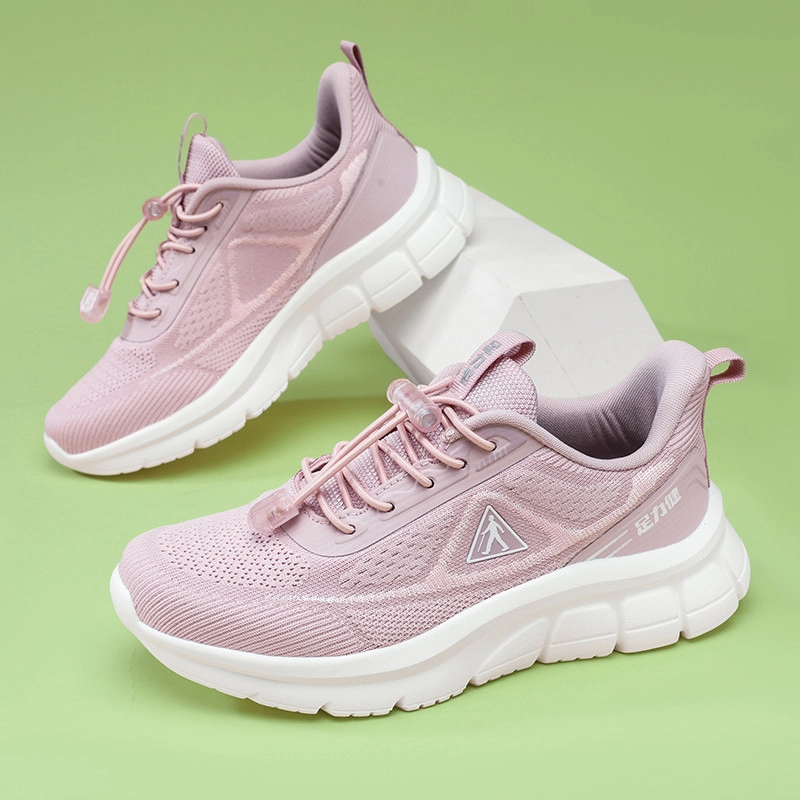
ZULIZ Women's Breathable Easy-On Walking Shoes KH-25189034
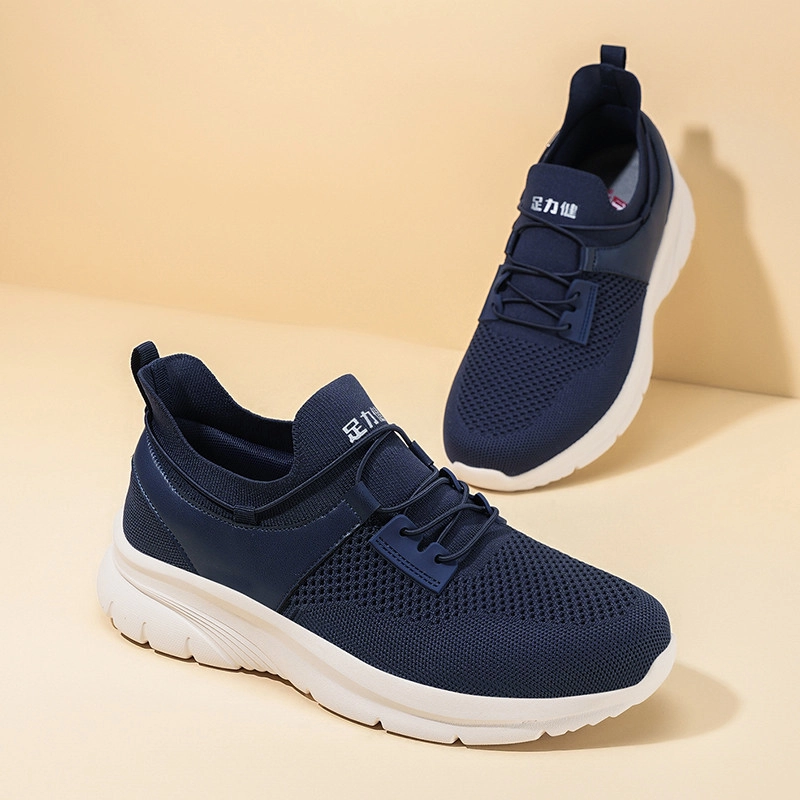
ZULIZ Unisex Lightweight Walking Shoes 26386036

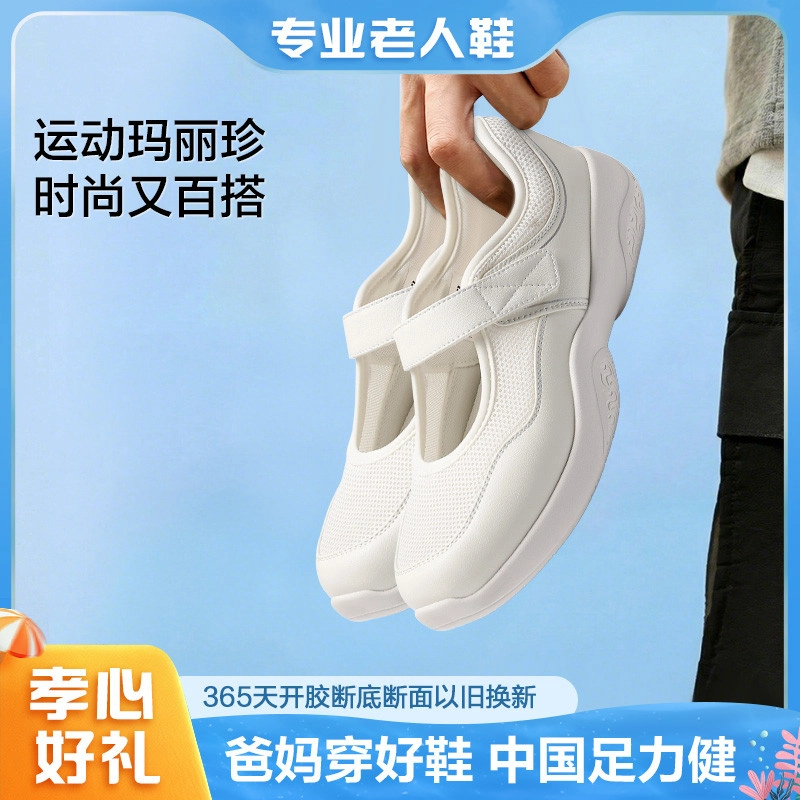
ZULIZ Women's Breathable Easy-On Mary Jane Shoes 26227010
Start Your ZULIZ Partnership Inquiry
Tell us about your market, business type, and cooperation interest. Our team will help you explore suitable senior footwear franchise, wholesale, or distributor opportunities.
Contact us

Ray.pang@zuliz.com

+86 155 1699 6565

5th Floor, Building 2, Courtyard 3, No. 521, Binhui North 1st Street, Tongzhou District, Beijing
Copyright © 2026 ZULIZ. All Rights Reserved. Designed by Gooeyun. Privacy Policy | Terms and Conditions | Sitemap
Facebook
YouTube
Instagram
Twitter