


What Should International Buyers Consider Before Choosing a Senior Footwear Partner?
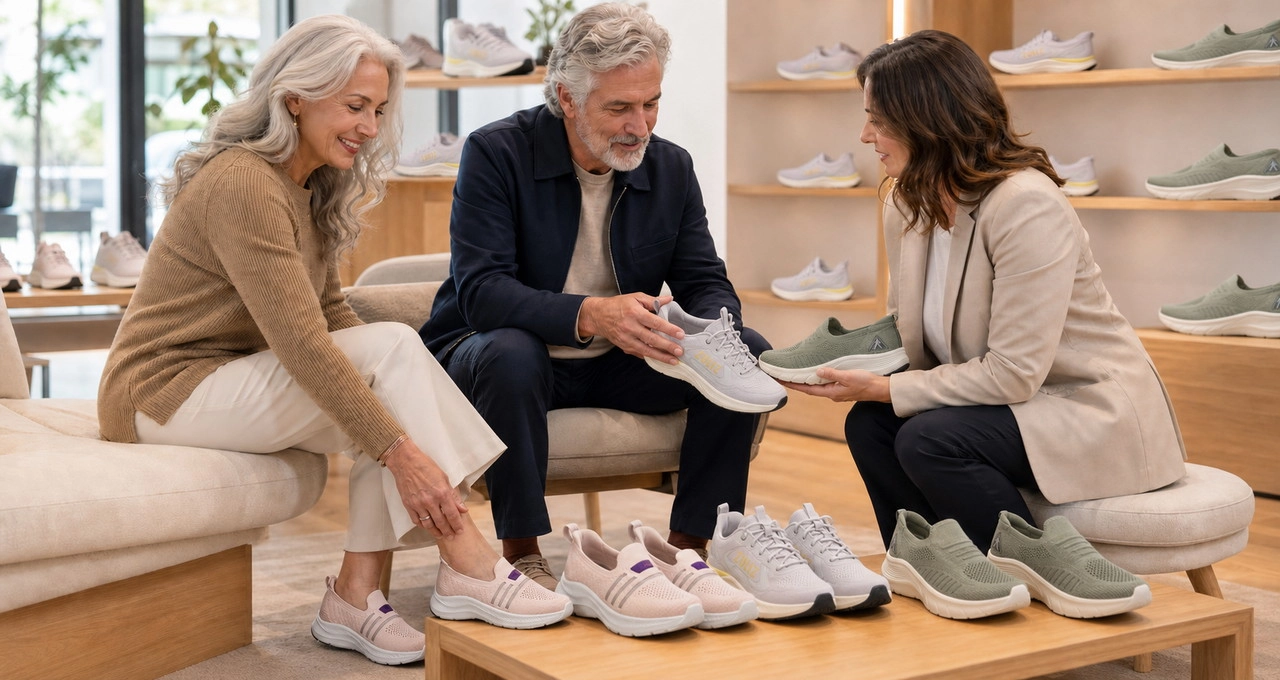
Choosing a Senior Footwear Partner means looking beyond price. Learn how to assess product expertise, quality controls, compliance, production capacity, and communication before committing to a supplier for your Senior Footwear range.
- Quick Answer
- Key Takeaways
- 1. What Should International Buyers Define Before Choosing a Senior Footwear Partner?
- 2. How Should Buyers Evaluate a Senior Footwear Partner's Product Expertise?
- 3. What Commercial Terms Should International Buyers Review?
- 4. How Can Buyers Assess a Senior Footwear Partner's Supply Capability?
- 5. What Support Should International Buyers Expect From a Senior Footwear Partner?
- 6. How Should Buyers Evaluate Communication and Long-Term Cooperation?
- 7. What Risks Should International Buyers Check Before Choosing a Senior Footwear Partner?
- 8. How Can International Buyers Compare Senior Footwear Partners Before Making a Decision?
- Conclusion
- FAQ
- Discuss Your Senior Footwear Partnership Requirements
Quick Answer
For international buyers, choosing a senior footwear partner should begin with a structured evaluation rather than a simple comparison of product prices or catalog size. Buyers should first define their own business requirements, then assess a potential partner's senior footwear expertise, product suitability, commercial terms, supply capability, communication, partner support, and long-term cooperation potential. A suitable partner should be able to provide products that fit the intended market while also supporting the practical requirements of purchasing, replenishment, quality management, and business communication. The goal is to determine whether the partner's capabilities match what the buyer can realistically execute in the target market.
Key Takeaways
Start With Your Own Requirements
Define your target customers, channels, purchasing capacity, product expectations, and cooperation objectives before comparing potential partners.
Look Beyond the Product Catalog
Evaluate product expertise, supply capability, commercial conditions, quality processes, and the resources available to support B2B buyers.
Check the Practical Risks
Review MOQ, lead times, quality consistency, communication, documentation, responsibilities, and replenishment before making a commitment.
Evaluate the Complete Partnership
The final decision should connect product, commercial, supply, communication, support, and business-fit considerations.
1. What Should International Buyers Define Before Choosing a Senior Footwear Partner?
Before comparing senior footwear suppliers or brands, international buyers should first understand what they actually need from a business partner. A buyer entering the category through an existing retail network may have different requirements from an importer developing regional distribution or an online business adding senior footwear to its product range. Without a clear internal requirement, supplier comparisons can easily become focused on price, product quantity, or individual styles instead of overall business suitability.
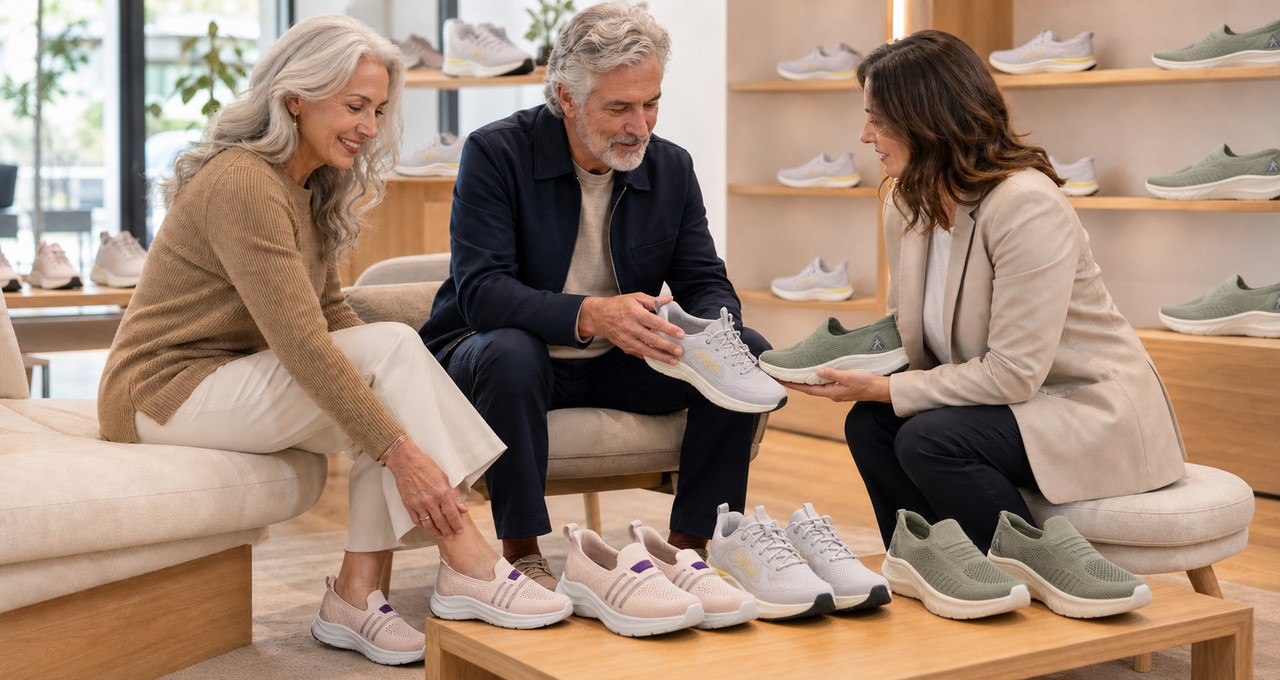
The first step is therefore to define the commercial situation. Consider the target customer, sales channels, expected purchasing volume, preferred product positioning, market coverage, inventory capability, and the level of support required from the footwear brand. These factors create a practical baseline for evaluating whether a potential senior footwear partner can fit the business.
Start With Your Business Profile
Which country, region, customer group, or sales territory will you serve?
Will you sell through retail stores, distribution, online channels, or multiple routes?
What order volume, inventory investment, and replenishment frequency can your business support?
What do you need from the brand beyond supplying finished footwear?
This preparation also helps separate two different decisions: choosing a suitable brand and choosing a suitable business partnership. Buyers who need the broader context can use the international senior footwear partnership framework to understand how these decisions connect before moving into a detailed partner evaluation.
2. How Should Buyers Evaluate a Senior Footwear Partner's Product Expertise?
A potential partner should demonstrate more than the ability to supply footwear. International buyers should understand whether the company has genuine experience developing products for older consumers and whether that expertise is reflected in its product range. Senior footwear is a focused category in which comfort, easy wearing, fit, stability, and everyday mobility can influence product selection and customer expectations.
The purpose of this evaluation is not to determine whether every product feature is suitable for every market. Instead, buyers should assess whether the partner has the product knowledge and development capability needed to maintain a relevant senior footwear proposition over time.
For buyers, the key question is whether the potential partner can support a senior footwear category rather than simply supply individual shoe styles. Product expertise should therefore be evaluated together with manufacturing, quality, and supply capabilities later in the selection process.
3. What Commercial Terms Should International Buyers Review?
Even when a buyer is satisfied with the product range, the partnership may not be commercially workable if the purchasing conditions do not match the business. International buyers should therefore review the basic commercial terms before moving from product evaluation to a formal order. The objective is to understand the full purchasing framework rather than focusing only on the unit price of a single product.
MOQ & Order Structure
Clarify minimum quantities, SKU requirements, mixed orders, and how initial purchasing is structured.
Pricing & Payment
Understand pricing conditions, payment arrangements, shipping-related costs, and the assumptions behind the quoted price.
Lead Time & Logistics
Confirm production lead times, shipping arrangements, packaging, documentation, and delivery responsibilities.
Commercial Questions to Confirm
- What is the minimum order requirement?
- Can different products or sizes be combined within an order?
- How are samples handled before the first commercial order?
- What are the expected production and delivery lead times?
- Which logistics responsibilities belong to the buyer and which belong to the supplier?
- How are repeat orders and replenishment handled?
These questions help buyers distinguish between a supplier that can quote a product and a senior footwear business partner that can support a repeat purchasing relationship.
4. How Can Buyers Assess a Senior Footwear Partner's Supply Capability?
A senior footwear partner may have suitable products and workable commercial terms, but buyers also need confidence that the supply side can support the business after the first order. Supply capability includes production resources, quality management, order communication, delivery coordination, and the ability to handle repeat purchasing. This becomes increasingly important when a buyer plans to serve multiple stores, downstream retail accounts, or a wider geographic market.
International buyers should therefore evaluate supply capability as an ongoing process rather than a one-time factory question. The relevant issue is whether the partner can maintain the expected product and service standards as the business develops.
Supply Capability Check
Can the supplier support the expected order volume and future purchasing requirements?
Are there clear quality-control and product-check processes?
Is there a clear process for order confirmation, production updates, and delivery communication?
Can successful products be reordered through a clear and manageable process?
For an international buyer, supply reliability is closely connected to commercial planning. A partner should therefore be evaluated not only on its ability to complete an initial shipment, but also on whether its supply system can support the purchasing cycle that follows.
5. What Support Should International Buyers Expect From a Senior Footwear Partner?
For B2B buyers, the value of a footwear partner can extend beyond the physical products. Depending on the cooperation structure, buyers may need product information, training resources, marketing materials, retail guidance, order coordination, or communication support. The exact scope varies between partnerships, so buyers should identify which forms of support are actually important to their business before assuming that every supplier provides the same resources.
| Support Area | What Buyers May Need |
|---|---|
| Product Information | Product specifications, sizing information, features, usage scenarios, and materials that help sales teams and customers understand the range. |
| Training | Resources that help sales staff understand the product proposition and communicate relevant benefits to customers. |
| Marketing Resources | Product images, selling-point materials, presentation resources, or other agreed marketing support. |
| Business Communication | Clear communication around product requirements, orders, feedback, replenishment, and market-related questions. |
Do not evaluate “support” simply by counting how many services a brand lists. Instead, ask whether the available support solves a real operational problem for your business.
This distinction is particularly useful when comparing a potential partner with other suppliers. Support should be evaluated as part of the overall commercial relationship rather than treated as a collection of optional benefits.
6. How Should Buyers Evaluate Communication and Long-Term Cooperation?
Communication is easy to overlook when buyers are comparing products and prices, but it becomes highly visible once an international partnership starts operating. Product specifications may need clarification, orders may require updates, customer feedback may lead to new questions, and replenishment plans can change with market demand. A partner that communicates clearly can make these processes easier to manage across different countries and time zones.
Before choosing a partner, buyers can therefore evaluate how the company handles questions, provides information, explains commercial conditions, and responds when requirements are unclear. The purpose is not to expect immediate answers to every request, but to understand whether there is a practical communication process that both sides can maintain.
Clear Information
Commercial terms, product details, order requirements, and responsibilities should be explained clearly.
Practical Responsiveness
Questions should have a clear route for follow-up, especially when they involve orders, specifications, or cooperation conditions.
Ongoing Coordination
The communication process should remain workable as purchasing, replenishment, and market requirements develop.
The goal is to identify whether both sides can maintain a practical working relationship. A strong product proposition becomes much more useful when product information, commercial terms, and operational communication remain clear throughout the cooperation.
7. What Risks Should International Buyers Check Before Choosing a Senior Footwear Partner?
Partner evaluation should include a deliberate risk check before the buyer moves into a commercial commitment. The purpose is not to assume that a potential supplier will create problems, but to identify unclear areas early enough for both sides to clarify them. This is particularly important for international transactions where differences in logistics, communication, documentation, payment arrangements, and market requirements can create additional complexity.
Before You Commit
If an important commercial or operational requirement is unclear, clarify it before the first major commitment rather than relying on assumptions. Written terms should define the responsibilities and conditions that matter to both sides.
A thorough risk check does not need to make the selection process complicated. It simply ensures that the buyer understands what is being purchased, what the partner is expected to provide, and what responsibilities remain with the buyer.
8. How Can International Buyers Compare Senior Footwear Partners Before Making a Decision?
After reviewing product expertise, commercial terms, supply capability, support, communication, and potential risks, buyers can bring the information together into one final evaluation. The purpose is not to find a supplier that looks strongest on one individual factor. Instead, buyers should determine whether the overall partner profile matches their own market, operating resources, and purchasing requirements.
A simple evaluation framework can help buyers compare several potential partners consistently. Each business can assign its own priorities based on its purchasing strategy and market requirements.
Senior Footwear Partner Evaluation Framework
Does the partner's product and cooperation structure match your business requirements?
Does the partner have relevant senior footwear knowledge and product development capability?
Do MOQ, pricing, payment, lead time, and ordering conditions work for your business?
Can the partner support consistent purchasing, quality, delivery, and replenishment?
Are the resources you actually need available within the proposed cooperation?
Can both sides communicate clearly about products, orders, feedback, and future requirements?
Have the major commercial, supply, logistics, and responsibility issues been clarified?
Can the relationship remain workable if order volume, channels, or market requirements change?
The partnership model itself should then be considered in relation to the buyer's actual operating resources. Buyers can compare the available senior footwear partnership routes once they have completed the broader partner evaluation.
This sequence is important because a buyer should first determine whether a brand is a suitable partner, and only then determine which specific cooperation structure makes the most sense.
Conclusion
Choosing a senior footwear partner is a business decision that should go beyond product appearance or unit price. International buyers need to evaluate whether the potential partner fits their own business requirements, understands the senior footwear category, provides workable commercial conditions, maintains suitable supply capability, and can communicate and cooperate effectively over time.
A structured evaluation also makes it easier to identify unclear terms and potential risks before a commercial commitment is made. Once the partner's overall suitability has been established, buyers can then compare the appropriate partnership structure, assess the target market, and determine the products and purchasing plan that fit their business. The objective is not simply to find a senior footwear supplier, but to establish a commercially workable relationship that can support the buyer's market and operating requirements.
FAQ
What should international buyers consider before choosing a senior footwear partner?
Buyers should consider their own business requirements first, followed by the partner's senior footwear expertise, product range, commercial terms, supply capability, quality processes, communication, partner support, and long-term cooperation potential.
How can buyers evaluate a senior footwear supplier?
A practical evaluation should cover product expertise, product consistency, MOQ, pricing, lead times, production capability, quality management, replenishment, communication, and the support available under the proposed cooperation.
Why is supply capability important when choosing a senior footwear partner?
Supply capability affects the buyer's ability to maintain product availability, quality consistency, delivery planning, and repeat purchasing after the first order. It becomes particularly important as sales channels and order volumes expand.
What commercial terms should senior footwear buyers confirm?
Buyers should clarify MOQ, pricing, payment conditions, samples, lead times, shipping responsibilities, packaging, documentation, order processes, and replenishment arrangements before making a commercial commitment.
Should international buyers evaluate the market before choosing a senior footwear partner?
Yes. Partner evaluation and market evaluation are separate but connected decisions. Buyers should understand their target market and business requirements so they can judge whether a potential partner's products, channels, supply capabilities, and cooperation structure are relevant to the opportunity.
Discuss Your Senior Footwear Partnership Requirements
If you are evaluating a senior footwear partner for wholesale, retail, distribution, franchise, or another B2B cooperation route, share your target market, business type, sales channels, product interests, and expected purchasing requirements with ZULIZ.
Discuss Partnership RequirementsWhy US Retail Buyers Should Prioritize ZULIZ for Older-Adult Comfort Footwear
How to Choose the Right Mom Shoes for Retailers, Wholesalers, and Distributors-ZULIZ
Mom Shoes Wholesale: How to Build a Profitable Senior Women's Footwear Business with ZULIZ
Mom Shoes Market Opportunities: A Growth Guide for Footwear Retailers, Wholesalers, and Distributors
You May Also Like
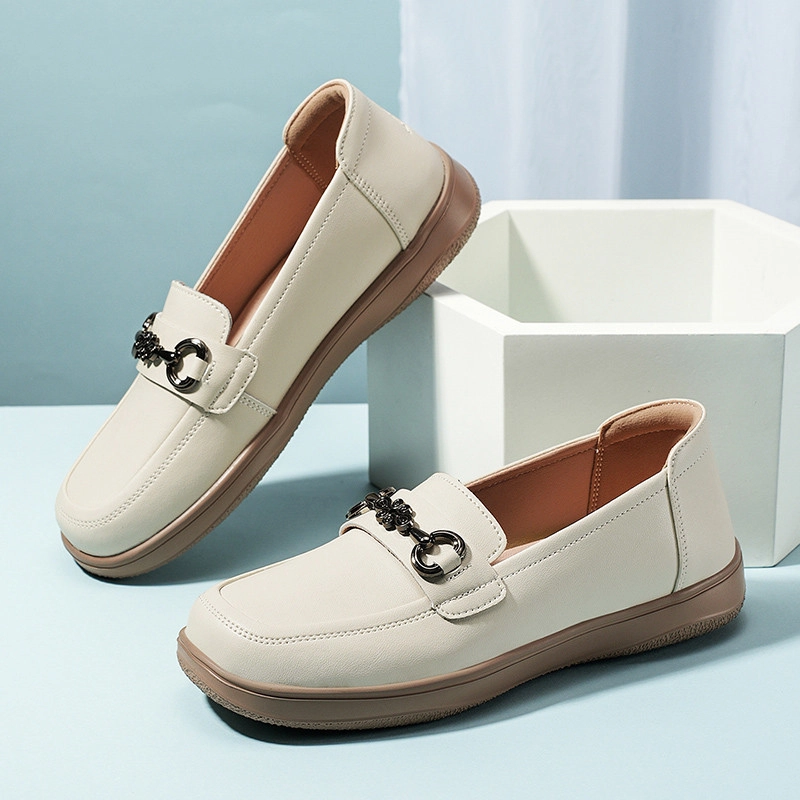
ZULIZ Women's Easy-On Mary Jane Shoes 25086151
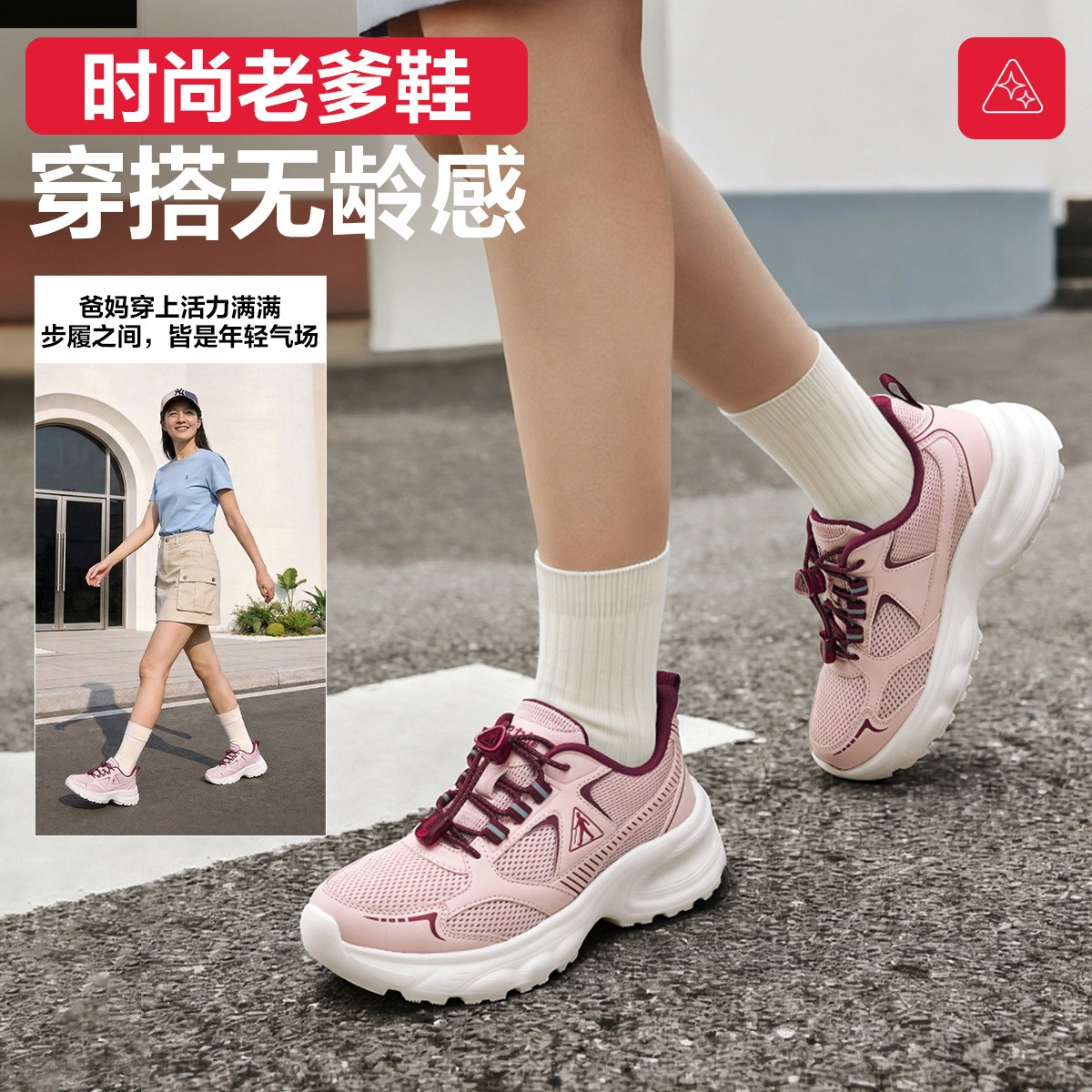
ZULIZ Unisex Breathable Walking Shoes 26239006
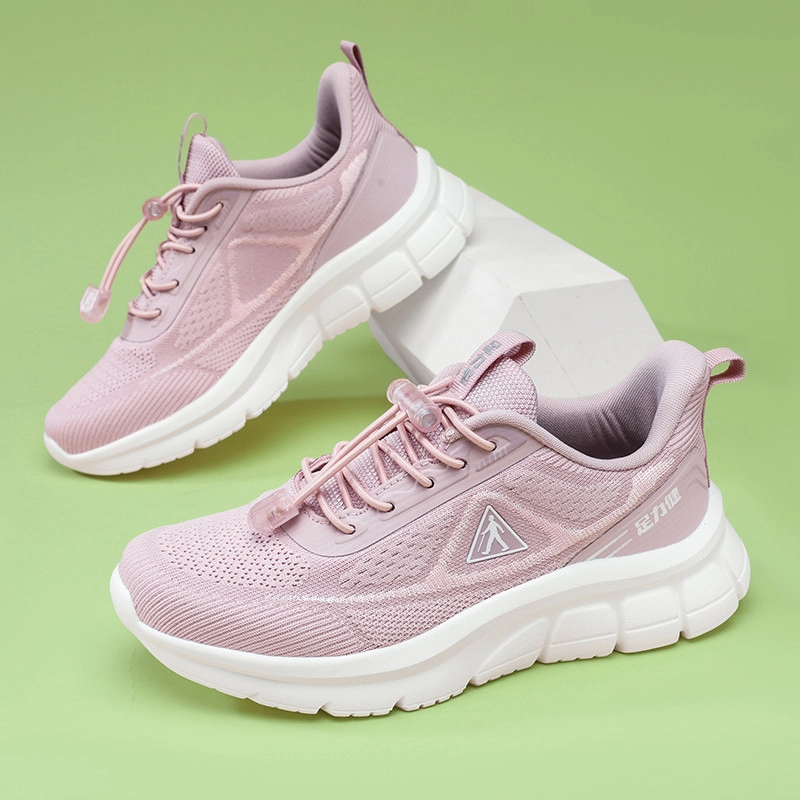
ZULIZ Women's Breathable Easy-On Walking Shoes KH-25189034
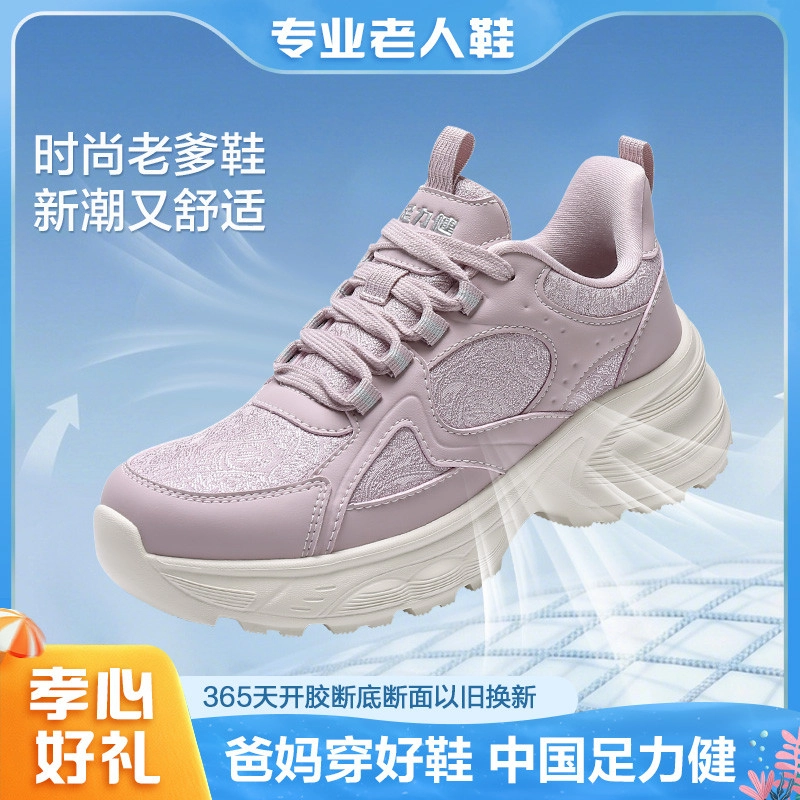
Start Your ZULIZ Partnership Inquiry
Tell us about your market, business type, and cooperation interest. Our team will help you explore suitable senior footwear franchise, wholesale, or distributor opportunities.
Contact us

Ray.pang@zuliz.com

+86 155 1699 6565

5th Floor, Building 2, Courtyard 3, No. 521, Binhui North 1st Street, Tongzhou District, Beijing
Copyright © 2026 ZULIZ. All Rights Reserved. Designed by Gooeyun. Privacy Policy | Terms and Conditions | Sitemap
Facebook
YouTube
Instagram
Twitter