


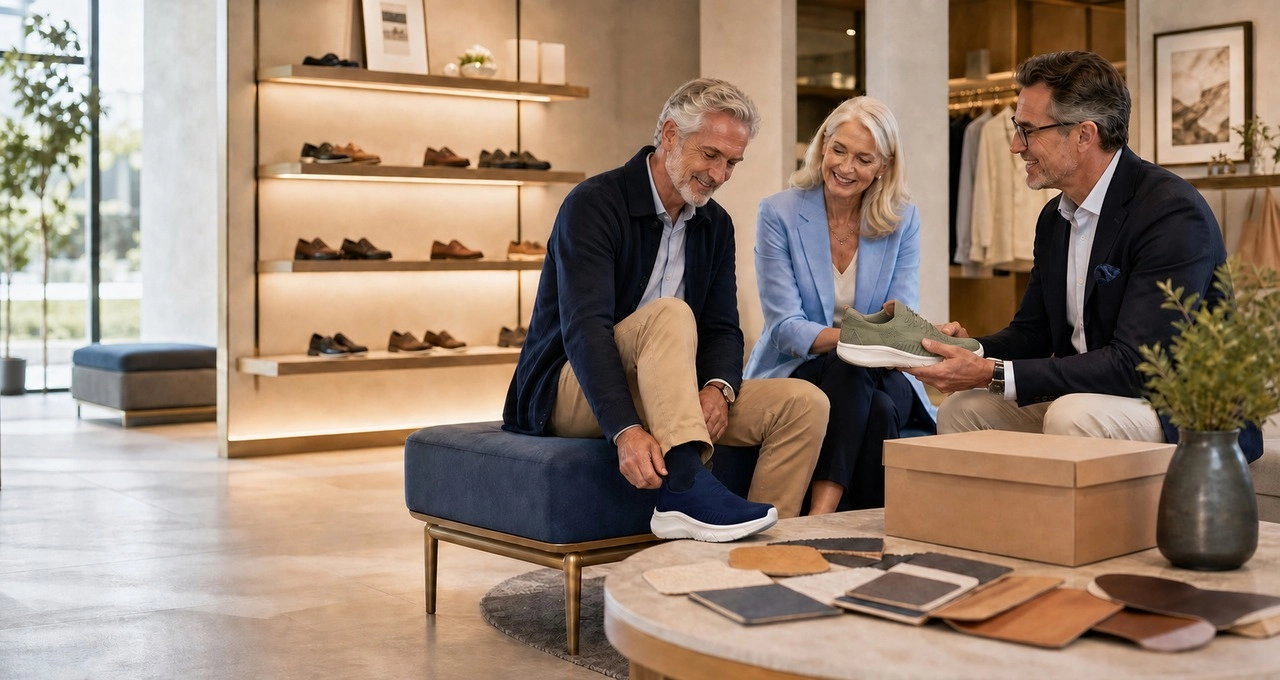
Choosing the right footwear becomes increasingly important with age. Senior footwear needs to do more than provide basic comfort. A suitable pair should balance stability, cushioning, fit, flexibility, traction, breathability, and ease of use while matching the wearer's foot shape, daily activities, and personal preferences.
For retailers, distributors, wholesalers, and footwear brands, understanding these factors is equally important. Senior consumers have different foot shapes, mobility levels, lifestyles, and expectations, so there is no single shoe that works equally well for everyone. A better approach is to evaluate footwear according to the consumer's needs and the conditions in which the shoes will be worn.
This guide explains the main factors to consider when choosing senior footwear, from fit and foot shape to stability, walking, travel, sandals, easy-on designs, and everyday comfort. It also connects these selection criteria with more detailed resources for specific footwear needs.
Quick Answer: What should you look for in senior footwear?
Start with fit and foot shape, then evaluate stability, traction, cushioning, flexibility, breathability, and ease of use. Finally, match the shoe to the intended activity, such as walking, travel, everyday wear, or warm-weather use. The right choice is not necessarily the softest or most feature-rich shoe, but the one that provides an appropriate combination of comfort, support, security, and practicality.
1. What Should Good Senior Footwear Provide?
Good senior footwear should support everyday movement without making the wearer feel restricted. Comfort is important, but comfort alone does not determine whether a shoe is suitable. The footwear should also provide a reasonably stable platform, appropriate cushioning, a secure fit, sufficient room for the toes, and an outsole suited to the intended walking environment.
Different consumers may prioritize different characteristics. Someone who spends several hours walking may value cushioning and traction, while someone who has difficulty bending down may place greater importance on easy-on construction. A customer with a wider foot may need a different shape from someone with a narrow heel or higher foot volume.
Key Senior Footwear Selection Factors
For businesses building an assortment, it is useful to compare these characteristics across different senior footwear products rather than judging a shoe only by its appearance or price.
2. How Foot Shape Affects Senior Footwear Choices
Foot shape should be one of the first considerations when choosing senior footwear. Older adults may experience changes in foot width, toe position, arch shape, or overall foot volume over time. As a result, a standard shoe shape may not provide the same level of comfort for every wearer.
The forefoot and toe box deserve particular attention. There should be enough usable space for natural toe movement without allowing the foot to move excessively inside the shoe. The heel should also remain reasonably secure so that the foot does not slide during walking.
For customers with broader forefeet, the right solution may involve a wider shoe shape rather than simply choosing a larger size. When evaluating senior shoes for wide feet, retailers should consider usable forefoot width, toe-box shape, upper flexibility, and heel security together.
Foot volume can also affect fit. Some customers may experience swelling or changes in foot volume during the day. In such cases, adjustable uppers and suitable internal space can be particularly useful. When evaluating shoes for swollen feet, the objective is to provide enough room without creating excessive movement inside the shoe.
Foot Shape Check
- Is the forefoot wide enough for natural toe movement?
- Does the toe box avoid unnecessary pressure?
- Does the heel remain reasonably secure?
- Can the upper accommodate normal changes in foot volume?
- Does the shoe provide usable space rather than simply increasing overall size?
3. How to Choose Senior Shoes for Safety and Stability
Safety is closely connected to how a shoe interacts with the ground and how securely it holds the foot. A comfortable shoe may still be unsuitable if the outsole does not provide appropriate traction or if the foot moves excessively inside the shoe.
When evaluating senior footwear, consider the relationship between outsole traction, sole structure, heel security, and overall fit. The shoe should feel stable during normal movement without being unnecessarily rigid or heavy.
For a more detailed evaluation, stability and secure traction are useful starting points when assessing whether a senior shoe is appropriate for everyday use.
Safety also depends on the intended environment. A shoe designed primarily for indoor use may have different outsole requirements from footwear intended for outdoor walking, travel, or mixed surfaces.
Safety Does Not Mean Maximum Support
A safe senior shoe does not necessarily need to be the stiffest or heaviest option. The better approach is to balance traction, stability, fit, flexibility, and comfort according to the wearer's actual needs.
4. How to Choose Senior Footwear for Different Daily Activities
The best senior footwear depends partly on how the shoe will be used. A person who walks every morning, travels frequently, spends most of the day indoors, or needs footwear for warm weather may have different requirements.
Existing resources can provide more detailed guidance for individual use cases. The purpose of the Pillar Page is to establish the selection framework, while specific articles can go deeper into a particular type of senior footwear.
5. Choosing the Right Senior Shoe Type
Once the basic fit and safety requirements are understood, the next step is choosing the footwear type that matches the wearer's lifestyle. Senior footwear can include walking shoes, casual shoes, travel footwear, sandals, easy-on styles, and more supportive designs.
Walking shoes are often appropriate for customers who spend significant time on their feet or walk regularly. For consumers comparing specific options, existing resources such as 4 Best Walking Shoes for Seniors provide a more focused starting point.
Travel footwear may need to balance lightweight construction, comfort, flexibility, and practical wearability during longer periods of movement. Casual footwear, meanwhile, often needs to combine comfort with an appearance that fits everyday wardrobes.
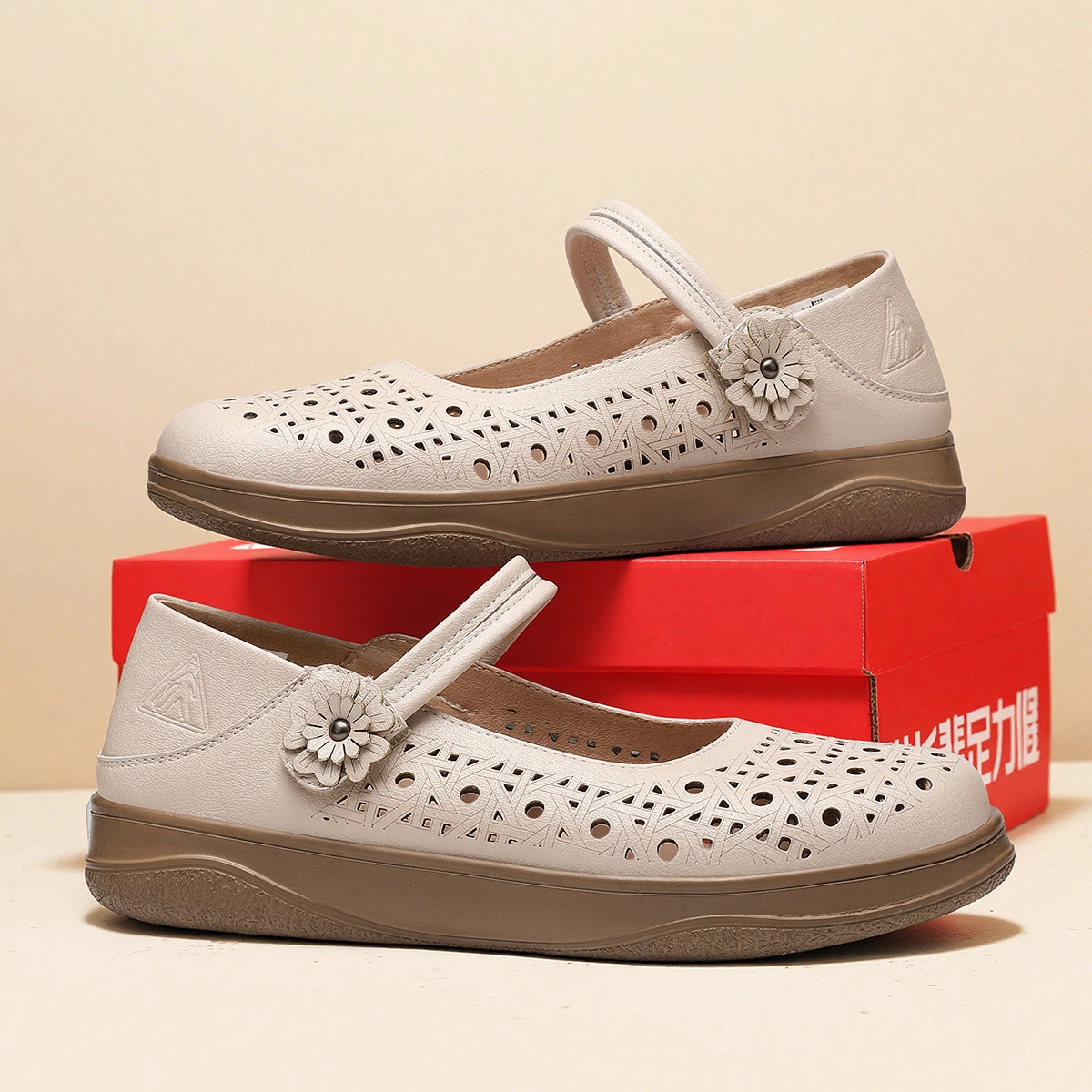
Warm-weather footwear creates another set of requirements. Sandals should not only feel breathable but should also keep the foot reasonably secure. A dedicated discussion of comfortable sandals for seniors can therefore focus more deeply on sandal construction, fit, and stability.
For consumers looking for specialized support, existing content such as senior citizen orthopedic shoes can provide a more focused discussion of supportive footwear.
6. Easy-On and Practical Senior Footwear
Ease of use is an important part of footwear selection and is sometimes overlooked when comfort and appearance receive most of the attention. Some older adults may prefer shoes that are easier to put on, remove, or adjust without repeatedly bending down or manipulating complicated closures.
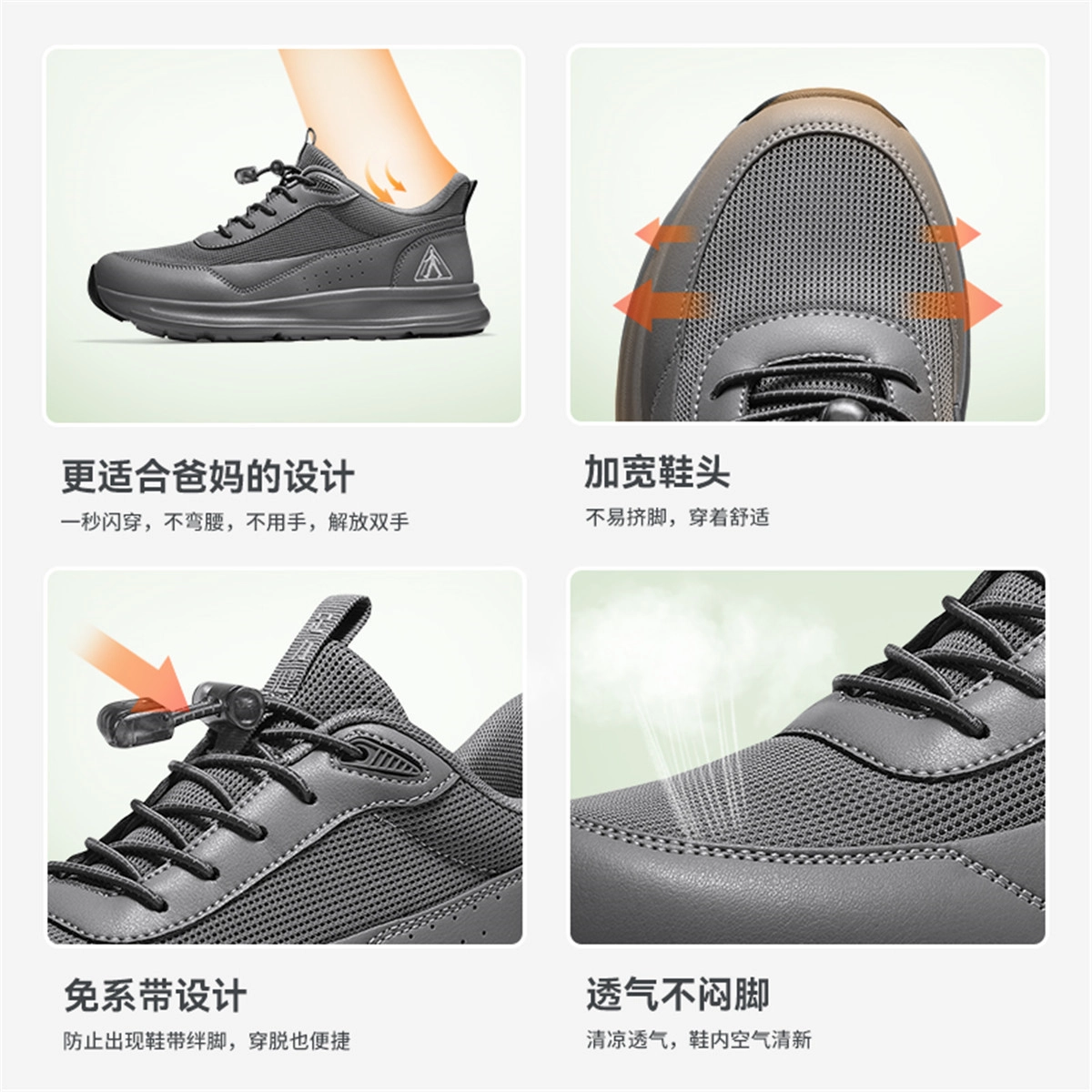
Slip-on designs, elastic systems, adjustable closures, and other easy-on constructions can each serve different needs. However, convenience should not come at the expense of fit. An easy-on shoe should still keep the foot reasonably secure during normal movement.
When comparing easy-on senior shoes, consider the relationship between closure design, heel security, upper structure, and overall fit.
Easy-On Does Not Mean Loose
The most practical easy-on footwear should make the wearing process simpler while maintaining an appropriate level of foot security. Convenience and stability should be evaluated together.
7. How Should Senior Footwear Fit?
Fit is one of the most important parts of choosing senior footwear. A shoe should provide enough room for natural toe movement while keeping the heel and midfoot reasonably secure. It should also remain comfortable during walking rather than only feeling comfortable when the wearer is standing still.
The correct fit is not necessarily the loosest fit. Excessive internal space can allow the foot to move around, while an overly tight shoe can create pressure around the toes, forefoot, or upper. Fit should therefore be evaluated as a balance between usable space and security.
For a more detailed evaluation, how senior shoes should fit can be assessed through toe room, forefoot width, heel security, upper pressure, and overall movement.
Senior Shoe Fit Test
8. Considering Comfort, Materials and Everyday Wear
Comfort is influenced by more than cushioning. Upper materials, interior construction, breathability, flexibility, weight, and the way the shoe interacts with the foot can all affect how comfortable footwear feels during extended wear.
A very soft shoe is not automatically a better shoe. Excessive softness can sometimes reduce the stable feel that a wearer expects from everyday footwear. Similarly, extremely lightweight construction may be appealing but should still provide an appropriate level of structure for the intended use.
The climate and expected wearing time should also be considered. Breathable materials can be valuable for extended wear or warmer environments, while construction should remain appropriate for the activity and conditions.
Comfort Is a Balance
The goal is not maximum softness, maximum flexibility, or minimum weight. Good senior footwear aims for a practical balance between comfort, support, stability, fit, and everyday usability.
9. Choosing Senior Footwear for Different Consumers
There is no single pair of senior shoes that is ideal for every older adult. A customer who walks every morning, someone who travels frequently, and someone who needs an easy-on design may all value different features.
Product selection may also differ according to foot shape, mobility, climate, wearing time, and personal style. For example, customers looking for everyday men's footwear may have different styling expectations from customers looking for women's comfort footwear, even when the underlying requirements for fit and stability are similar.
Existing content can provide more focused guidance for these specific consumer groups, including resources covering shoes for senior men and other comfort-focused footwear needs.
The important point is to avoid treating “senior” as one uniform consumer category. A well-designed product range should recognize meaningful differences in needs while maintaining consistent standards for comfort, fit, and practical usability.
10. How Retailers and Distributors Should Evaluate Senior Footwear
For retailers and distributors, choosing senior footwear is not only a matter of evaluating individual products. The goal is to build an assortment in which each product has a clear role and addresses a meaningful customer need.
A balanced assortment may include different use cases, foot shapes, closure systems, levels of cushioning, seasonal requirements, and consumer profiles. At the same time, too many products with almost identical functions can make the range harder to manage and harder for customers to understand.
For Retailers & Distributors
A useful assortment is not necessarily the one with the most styles. It is the one where each product has a clear commercial and consumer role.
- Cover meaningful differences in customer needs.
- Avoid unnecessary duplication between similar products.
- Make each style easy to understand by its primary use case.
- Balance functional requirements with everyday appearance.
- Consider size, width, closure, season, and intended activity.
- Evaluate whether each product has a clear reason to remain in the assortment.
For businesses evaluating a broader senior footwear range, the product portfolio can be reviewed alongside factors such as target market, channel, price positioning, replenishment requirements, and product differentiation.
11. A Practical Senior Footwear Buying Checklist
Whether you are selecting one pair for personal use or evaluating products for a retail assortment, the following checklist provides a practical way to review senior footwear before making a decision.
- Fit: Is there enough room for natural toe movement while keeping the foot secure?
- Foot shape: Does the shoe provide enough usable space for the intended foot shape?
- Stability: Does the shoe feel stable during normal walking?
- Traction: Is the outsole appropriate for the intended environment?
- Cushioning: Does the underfoot feel remain comfortable during extended wear?
- Flexibility: Does the shoe allow natural movement without feeling excessively soft?
- Breathability: Are the materials appropriate for the climate and expected wearing time?
- Ease of use: Can the wearer put on and adjust the shoe comfortably?
- Purpose: Does the design match walking, travel, casual, warm-weather, or another specific use case?
- Product role: For businesses, does the product add meaningful differentiation rather than duplicate an existing style?
Conclusion: Choosing Senior Footwear with a Complete Approach
Choosing the right senior footwear is not simply a matter of finding the softest or most comfortable pair. A better approach is to consider the complete relationship between fit, foot shape, stability, cushioning, traction, flexibility, ease of use, and the activities for which the footwear will be worn.
For individual consumers, this means starting with the wearer's actual needs rather than choosing footwear based only on appearance or a single comfort feature. For retailers, distributors, wholesalers, and footwear brands, it means building an assortment that covers meaningful differences in customer requirements while giving every product a clear role.
The most effective senior footwear strategy is therefore not about offering one universal solution. It is about matching the right footwear construction to the right consumer, foot shape, use case, and market requirement. More specific topics such as wide-fit footwear, safety-focused designs, senior shoe fit, sandals, easy-on shoes, and footwear for changing foot volume can then be evaluated in greater depth through dedicated resources.
The key takeaway:
The right senior footwear should provide an appropriate balance of comfort, fit, stability, usability, and purpose. Whether the goal is choosing one pair or building a complete product assortment, starting with the intended wearer and use case makes the decision clearer and more practical.
12. Frequently Asked Questions About Choosing Senior Footwear
Looking for Senior Footwear for Your Business?
Build your senior footwear collection around comfort, stability, practical design, and the everyday needs of older consumers. ZULIZ can support businesses evaluating different senior footwear categories and product requirements.
Inquire About Senior Footwear SolutionsWhether you are a wholesaler, distributor, retailer, or online footwear business, ZULIZ can support sourcing needs across senior walking shoes, travel footwear, casual shoes, sandals, and comfort-focused products. The ZULIZ approach to senior footwear combines product variety with a focus on practical comfort and everyday usability.
The right senior footwear is not simply the softest, widest, or most supportive option. The better choice is the product that provides the right combination of fit, comfort, stability, usability, and design for the person who will wear it and the conditions in which it will be used.



Facebook
YouTube
Instagram
Twitter