


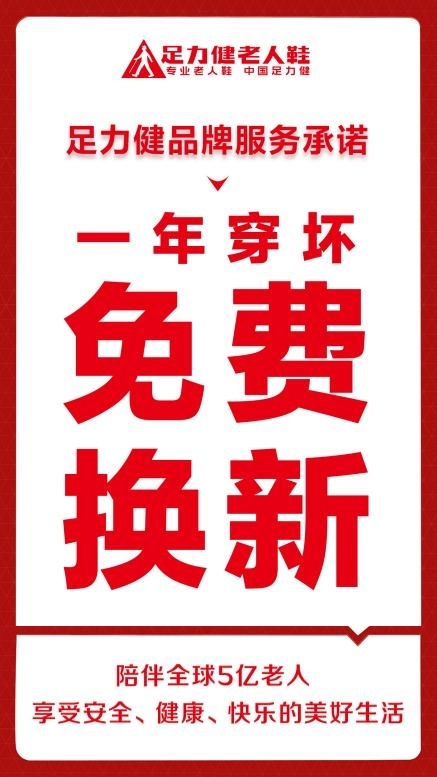
In cross-border footwear, a credible after-sales commitment is not the broadest promise a brand can publish. It is the clearest process a partner can operate when a real customer reports a real problem.
For ZULIZ's global B2B cooperation channels, the one-year after-sales policy has a defined scope and remedy. Qualifying sole separation or sole break cases must be reported within one year under the applicable policy. The partner retains proof of purchase, SKU details, photographs and video. After policy review and verification, the corresponding amount is credited directly against the cooperation partner's goods payment. Global after-sales is coordinated through the applicable local store, agent, distributor or cooperation channel.
That process is deliberately more precise than an unconditional "free replacement" slogan. It protects the end customer's route to support, gives the local partner a documented resolution path and allows ZULIZ to review product evidence consistently across markets.
The policy in one view
| Policy element | Operational meaning |
|---|---|
| Qualifying issue | Sole separation or sole break that qualifies under the applicable policy. This article does not extend the policy to other conditions. |
| Reporting period | The case must be reported within one year under the applicable policy. The relevant date and any conditions should be confirmed in the written cooperation documents. |
| Evidence | Proof of purchase, SKU details, clear photographs and video are retained and submitted for review. |
| Review | The case is reviewed against the applicable policy and the evidence is verified. Submission alone does not constitute approval. |
| B2B remedy | After review and verification, the corresponding amount is credited directly against the cooperation partner's goods payment. |
| Global coordination | The applicable local store, agent, distributor or cooperation channel coordinates the customer-facing process and communicates with ZULIZ. |
This is a policy-reviewed B2B credit process. It is not an unconditional promise that every reported condition will receive an immediate new pair, cash refund or automatic credit. Any customer-facing remedy offered by a local operator must also comply with local law and the operator's published local terms.
Why a precise process is stronger than a sweeping promise
Footwear after-sales becomes more complex when a brand, a distributor, a retailer and an end customer operate in different countries. The customer wants a prompt answer. The retailer needs a practical way to protect the relationship. The distributor needs consistent commercial treatment. The brand needs enough evidence to determine whether the case falls within policy and whether similar cases reveal a broader product pattern.
A vague promise shifts that complexity downstream. Store teams improvise. Customers receive different answers from different channels. Partners may carry a cost without knowing whether it will be recognised. The brand receives incomplete photographs or a product with no identifiable SKU. Each party then spends time arguing about the case instead of resolving it.
A defined workflow does the opposite. It establishes who receives the report, which issues are in scope, what evidence is required, who reviews it and how an approved case is settled with the partner. This is the quality logic behind the policy: service quality depends on repeatable decisions, not only reassuring language.
Four forms of evidence reduce four different risks
1. Proof of purchase anchors the case to a real transaction
Proof of purchase links the reported product to a date, seller and transaction. That information helps establish whether the case was reported within the applicable one-year period. It also gives the local channel a customer record to follow through to closure.
This requirement protects both sides. The customer has a documented service request rather than an informal conversation. The partner can show when and where the product was sold. ZULIZ can apply the same timing logic to cases submitted from different markets. When a record is missing or unclear, the local channel should ask for clarification rather than promise an outcome that has not yet been reviewed.
2. SKU details make the product traceable
"A pair of shoes" is not enough information for quality analysis. A SKU identifies the model and helps connect the report to the relevant product specification, material combination and commercial order. Where available, size, colour, batch or production identifiers add further precision.
Traceability changes after-sales from an isolated expense into operational intelligence. If similar verified cases cluster around one SKU or shipment cohort, the pattern can be escalated for product and supply-chain review. If cases are scattered, the data can still improve inspection guidance and partner training. Without SKU-level records, neither conclusion is reliable.
3. Photographs and video make remote review practical
Clear images show the location and extent of a reported sole separation or sole break. Video can provide additional context that a single angle cannot capture. In a global network, this evidence allows an initial review without automatically moving the physical product across borders, which may add time, freight and customs complexity.
The goal is not to create paperwork for the customer. It is to create enough visibility for a fair decision. The local channel can help by using a simple capture checklist: photograph the complete pair, the affected area, the outsole and the product label; then record a short, well-lit video that shows the issue clearly. Blurred, tightly cropped or unrelated images are more likely to delay a case because they leave basic questions unanswered.
4. The local channel preserves continuity for the end customer
The applicable local store, agent, distributor or cooperation channel is normally the most accessible contact for the customer. It can communicate in the local language, understand the transaction and explain what will happen next. That continuity matters particularly when the customer is older or a family member is handling the case on their behalf.
Local coordination does not mean the partner decides policy eligibility alone. It means the partner owns the customer communication, assembles the evidence and keeps the case moving while ZULIZ conducts the applicable review. The result is a clearer division of responsibility: local service remains personal, while policy decisions remain consistent.
How a qualifying case moves from report to credit
- Receive the report. The local cooperation channel records the customer's contact details, purchase information and description of the reported sole separation or sole break.
- Check the reporting period. The partner uses the purchase record and the applicable written policy to determine whether the case has been reported within one year. If the timing cannot be established, the record should be clarified before any outcome is promised.
- Identify the product. Record the SKU and, where available, size, colour, order reference and batch or production identifier.
- Capture evidence. Retain proof of purchase, photographs and video that clearly show the product and reported issue.
- Submit the case for review. The partner sends the complete case file through the agreed cooperation channel. A complete submission reduces repeated requests and avoidable delay.
- Review and verify. ZULIZ assesses whether the reported case qualifies under the applicable policy and whether the evidence supports the claim.
- Apply the approved B2B remedy. After review and verification, the corresponding amount is credited directly against the cooperation partner's goods payment.
- Close the local case. The partner communicates the result to the customer, applies the appropriate local resolution and records the completion date.
- Feed the learning back. Verified cases are grouped by SKU, order or cohort where possible so recurring signals can inform quality control, product development and partner guidance.
The seventh step is commercially important. A direct credit against goods payment helps place an approved amount into the ongoing trading relationship rather than leaving the partner with an unresolved claim balance. It can therefore protect partner cash flow, but only after the case has passed policy review and verification. It should not be booked or communicated as an automatic receivable when the claim is first submitted.
What the policy does-and does not-say
| The policy states | The policy should not be presented as |
|---|---|
| Qualifying sole separation or sole break cases can enter the process. | Coverage for every type of damage, wear, fit issue or product complaint. |
| The case must be reported within one year under the applicable policy. | An open-ended or lifetime commitment. |
| Proof of purchase, SKU, photographs and video are required for review. | Approval based only on an unsupported verbal report. |
| After review and verification, the corresponding amount is credited against the partner's goods payment. | An immediate cash refund, unconditional shoe replacement or automatic credit at submission. |
| The applicable local cooperation channel coordinates global after-sales. | A promise that any customer can obtain the same remedy from any store in any country. |
These boundaries are not a retreat from customer care. They are what make a commitment operable. A partner can train staff against them, a customer can understand the next step and a brand can apply the same review logic across a growing network.
Why the process protects both trust and cash flow
After-sales has two jobs. The first is relational: the customer needs to know that a reported problem will not disappear between the retailer and the brand. The second is economic: the partner needs a defined way to recover the corresponding approved amount without turning every case into a separate commercial dispute.
Local coordination protects the relationship. Evidence protects the decision. The goods-payment credit protects the continuity of the B2B account. Together, those elements reduce three common sources of friction: inconsistent promises to customers, disagreement over what product was involved and uncertainty about how an approved case will be settled.
Scale makes this discipline more important. ZULIZ reports that global cumulative sales have exceeded 100,000,000 pairs. That figure communicates reach, but reach alone is not the quality mechanism. The mechanism is the ability to connect an individual report to a transaction, a SKU, visual evidence, a review outcome and a commercial resolution. The larger the network becomes, the more valuable that traceability is.
A practical operating standard for partners
Partners can make the policy easier to use by adopting a small number of operating rules:
- Publish a local contact route. Customers should know which store, agent, distributor or channel receives an after-sales report.
- Train staff on scope. Teams should say "sole separation or sole break subject to policy review," not "anything goes wrong and the shoes are replaced."
- Use one case template. Capture the purchase record, SKU, images, video, customer description, submission date, review status and final result in the same format.
- Acknowledge before deciding. A prompt acknowledgement reassures the customer without prejudging eligibility.
- Do not hide missing evidence. Ask for a clearer image, correct SKU or purchase record when needed. An incomplete file is a service task to resolve, not a reason to make an unsupported promise.
- Track the credit. Match each approved amount to the relevant case and goods-payment record so finance and service teams close the same case.
- Review patterns, not anecdotes. Examine verified cases by SKU, size, order and time period. Escalate recurring signals through the agreed cooperation channel.
The applicable written policy and cooperation agreement should also define timing, submission channels, record retention and any market-specific requirements. Local consumer laws may create obligations separate from the B2B credit process described here. Partners should align their customer-facing terms with local legal advice and the signed ZULIZ cooperation documents.
The real service benchmark is a claim that can be followed from start to finish
Quality is often discussed at the factory gate: materials, construction, inspection and consistency. For a global footwear partner, quality also includes what happens after a product enters the market. Can the customer reach a responsible local channel? Can the product be identified? Can the issue be seen clearly? Can the case be reviewed against a defined policy? Can the approved amount be settled in a form the partner can reconcile?
ZULIZ's one-year B2B after-sales process answers those questions with a traceable path. Qualifying sole separation or sole break cases reported within one year are documented with proof of purchase, SKU details, photographs and video. After policy review and verification, the corresponding amount is credited against the cooperation partner's goods payment. The local store, agent, distributor or cooperation channel coordinates the customer-facing process.
That is the quality logic behind the policy: not an unlimited promise, but a defined system that can protect the customer relationship, reduce avoidable disputes, support partner cash flow and turn verified cases into useful product knowledge.
Policy note: Eligibility, the measurement of the one-year period, evidence requirements and settlement details are governed by the applicable written policy and cooperation agreement, together with any mandatory local law.




Facebook
YouTube
Instagram
Twitter